Hair Porosity Explained: The Complete Guide for Pakistani Hair
If you've ever bought a hair oil that worked wonders for a friend and did almost nothing for you, porosity is probably the missing piece. Two people can have similar hair length, similar hair fall, even similar climate exposure, and still respond completely differently to the same product. because their hair's cuticle behaves differently at a structural level. That's porosity: how easily your hair absorbs and holds onto moisture and oil.
This guide explains what hair porosity actually is, how to identify your own porosity type, and. specific to Pakistan. how our climate and water supply interact with porosity in ways that most general hair care content, written for Western climates and water systems, simply doesn't address. It also covers which oils genuinely suit each porosity type, why botanical oils behave differently from mineral-oil-based products at a porosity level, and a realistic weekly routine for each hair type. Nothing here promises overnight transformation. porosity is a structural trait, and working with it is a long-term habit, not a quick fix.
What is hair porosity?
Hair porosity refers to your hair's ability to absorb and retain moisture, and it's determined almost entirely by the condition of the cuticle. the outermost layer of the hair shaft. Under a microscope, the cuticle looks like shingles on a roof: overlapping, translucent scales made of keratin protein that either lie flat and tightly closed, or lift and separate, depending on genetics, damage, and chemical treatment history.
When those cuticle shingles lie flat, moisture and oil struggle to get past them. that's low porosity hair. When they're moderately raised, moisture moves in and out at a balanced rate. that's medium (or normal) porosity. When they're significantly lifted, chipped, or missing in places, moisture rushes in and escapes just as fast. that's high porosity hair. Beneath the cuticle sits the cortex, which holds most of the hair's structural protein and pigment, and it's this cortex that porosity ultimately protects or exposes.
It's worth being precise about one thing upfront: porosity is not the same as hair type (straight, wavy, curly, coily) or hair texture (fine, medium, coarse), even though they're often confused. You can have fine, straight hair with high porosity from heat damage, or thick, coily hair with low porosity that's never been chemically treated.
- Hair type. curl pattern: straight, wavy, curly, coily.
- Hair texture. strand thickness: fine, medium, coarse.
- Hair porosity. cuticle condition: how easily moisture and oil are absorbed and retained.
- Hair density. how many strands per square inch of scalp.
Genetics set your baseline porosity, but it isn't fixed for life. Heat styling, chemical treatments (bleach, relaxers, keratin treatments), UV exposure, and. critically for Pakistan. hard water and dry heat can gradually shift naturally low or medium porosity hair toward high porosity over months and years.
Low porosity hair
What it looks and feels like: low porosity hair has a tightly packed, flat cuticle that resists water and product absorption. Water beads up on the surface rather than soaking in, hair takes noticeably longer to get fully wet in the shower, and it takes longer to air-dry afterward. Oils and creams often sit on top of the strand, which can leave hair looking greasy or weighed down even with a small amount of product.
Why it happens: low porosity is most common in straight to loosely wavy hair with minimal cuticle damage. often hair that hasn't been heavily chemically treated or heat-styled. The lipid layer surrounding the cuticle is more intact, acting as a natural water-repellent barrier.
The trade-off: low porosity hair is naturally smoother, shinier and more resistant to damage. but that same tight cuticle makes it genuinely difficult to hydrate and prone to product buildup, since heavier products can't penetrate and just accumulate on the surface.
What actually helps: lightweight, water-based products applied to damp (not dry) hair; gentle heat during deep conditioning (a warm towel or steam) to temporarily lift the cuticle just enough for products to penetrate; and regular clarifying washes to prevent buildup, since low porosity hair holds onto residue longer than other types.
Medium (normal) porosity hair
What it looks and feels like: medium porosity hair sits in the sweet spot. the cuticle is moderately raised, allowing a balanced rate of moisture absorption and retention. This hair type typically holds styles well, takes colour and chemical treatments fairly predictably, and requires the least troubleshooting of the three categories.
Why it happens: this is generally considered the default healthy cuticle state. not so tightly sealed that products can't penetrate, not so damaged that moisture escapes rapidly.
The trade-off: medium porosity hair is the easiest to maintain, but it isn't damage-proof. repeated heat styling, sun exposure or chemical treatment can push it toward high porosity over time, so normal porosity is more of a maintained state than a permanent guarantee.
What actually helps: a balanced routine. regular moisturising, occasional (not weekly) deep conditioning, and protective measures against heat and sun damage. is generally enough without an aggressive intervention routine.
High porosity hair
What it looks and feels like: high porosity hair absorbs moisture and product almost instantly, but loses it just as fast. This often shows up as hair that dries very quickly after washing, tangles or frizzes easily (especially in humidity), feels rough or straw-like, and has visibly split or thinning ends.
Why it happens: high porosity is more often the result of cumulative damage than genetics alone. repeated heat styling, chemical processing, harsh cleansing, and prolonged UV or hard-water exposure gradually lift and chip away at the cuticle layer. Naturally curly and coily hair types are also more prone to structurally higher porosity, since the twists and bends in the shaft create more points where the cuticle lifts even without chemical damage.
The trade-off: high porosity hair absorbs treatments and colour extremely well, which can be an advantage for certain styling goals. but it struggles to hold onto moisture, leading to a cycle of dryness, brittleness and breakage that keeps compounding if left unaddressed.
What actually helps: protein-moisture balance is the central concept. high porosity hair typically needs both protein (to help fill in gaps in the damaged cuticle) and heavier, oil-based sealants (to lock in moisture afterward) rather than lightweight, water-based products alone. Reducing further heat and chemical damage matters just as much as any product added to the routine.
Porosity types at a glance
- Cuticle structure. low: tightly sealed and flat. medium: moderately raised. high: lifted, gapped or chipped.
- Absorbs water. low: slowly, resists. medium: balanced. high: very quickly.
- Retains moisture. low: well once absorbed. medium: well. high: poorly, evaporates fast.
- Air-dry time. low: long. medium: moderate. high: very fast.
- Product buildup risk. low: high. medium: low to moderate. high: low.
- Frizz in humidity. low: low. medium: moderate. high: high.
- Best product weight. low: lightweight and water-based. medium: balanced. high: richer, oil-sealed.
How weather in Pakistan affects hair porosity
Pakistan's climate is genuinely tough on hair, and most porosity advice circulating online is written for temperate Western climates that don't reflect what's actually happening to hair here for most of the year.
Intense, prolonged heat and UV exposure
Cities like Lahore, Multan and Karachi regularly see summer temperatures well above 40°C with strong, direct UV for most of the day. UV radiation is well documented to break down the lipid layer that protects the cuticle, gradually shifting even naturally low or medium porosity hair toward a higher-porosity, more damage-prone state.
Dry heat versus humid monsoon swings
Much of Pakistan experiences a sharp seasonal contrast. dry, arid heat for large parts of the year, followed by a humid monsoon. This swing is particularly hard on porosity because the hair shaft expands and contracts with every wetting and drying cycle (hygral fatigue); the more extreme and frequent these swings, the more cumulative stress the cuticle experiences.
Dust and airborne pollution
Urban Pakistani cities carry high particulate air pollution for much of the year. Fine dust settles on the scalp and hair shaft and, combined with sweat, contributes to both scalp buildup (a low-porosity problem) and surface friction damage that roughens the cuticle (a high-porosity problem).
- Intense summer UV. shifts low/medium porosity toward high over time; sun protection (dupatta, hat, UV hair mist) matters more than most routines account for.
- Dry heat, April to June. high porosity worsens fastest; extra sealing oil needed, avoid daily hot-water washing.
- Monsoon humidity, July to September. high porosity means frizz and moisture-loss cycles; use anti-humidity sealants and avoid over-washing.
- Urban dust and pollution. buildup for low porosity, friction damage for high porosity; a regular clarifying wash helps regardless of type.
How hard water changes porosity
Hard water. water carrying a high concentration of dissolved calcium and magnesium, common in groundwater across much of Punjab and in parts of Karachi's supply. doesn't cause hair loss from the follicle in any way current research confirms, but it does something porosity-relevant: it leaves mineral deposits on the hair shaft with every single wash.
Here's the mechanism. When calcium and magnesium ions interact with the natural oils and soap on the scalp, they form insoluble mineral salts that cling to the cuticle surface rather than rinsing away cleanly. On low porosity hair, this compounds the existing buildup problem, making hair feel coated, dull and even harder to hydrate. On medium-to-high porosity hair, the sharp, chalky deposits can physically roughen an already-lifted cuticle, accelerating dryness and breakage.
The actual research here is somewhat mixed. one widely cited 30-day study found no significant change in tensile strength from hard water exposure, while a separate 2018 study measuring hair after hard-water washing found a measurable drop in breaking strength alongside increased surface roughness. What's consistently agreed upon is that hard water reliably causes visible dullness, buildup and a decline in hair feel. the disagreement is about how much it affects underlying strength, not whether it affects hair at all.
Signs you're dealing with hard-water buildup
- Hair feels coated or waxy even right after washing.
- Shampoo doesn't lather well.
- Hair colour, if dyed, fades faster or shifts tone.
- Persistent dullness that doesn't improve with more oil or conditioner.
- White, chalky residue visible around taps or shower fittings at home.
What helps: a monthly clarifying shampoo with a mild chelating agent to bind and rinse away mineral deposits; a final cool-water rinse, since cooler water helps the cuticle lie flatter and reduces mineral adhesion; and, where feasible, a shower filter for households with visibly hard water. None of these require an expensive overhaul. they're maintenance habits that matter more in a hard-water region than they would elsewhere.
Which oils suit each porosity type
Oil choice isn't one-size-fits-all, and using the wrong weight of oil for your porosity type is one of the most common reasons a genuinely good product doesn't work for someone. The goal for low porosity hair is penetration without buildup; for high porosity hair, it's sealing without heaviness; for medium porosity, it's simply consistency.
- Low porosity. lightweight, fast-absorbing oils applied to damp hair with gentle heat: argan, grapeseed, light rosemary-infused blends, almond oil. Use heavy castor oil and shea-based butters sparingly.
- Medium porosity. balanced, moderate-weight oils: coconut, almond, most standard botanical blends. Very heavy occlusive oils used daily aren't usually necessary.
- High porosity. richer sealing oils applied after moisture (LOC/LCO method): castor, coconut (pre-wash), shea-infused and thicker botanical formulas. Very light, fast-evaporating oils alone, without a moisture step first, won't hold.
The best hair oil for low porosity hair should be applied strategically. a small amount on damp, not dry, hair, ideally after a light water-based leave-in, so the oil seals moisture in rather than blocking it out. This is the opposite of what many people instinctively do (applying a thick oil to dry hair), which is one of the most common porosity mismatches in everyday routines.
High porosity hair, by contrast, benefits from heavier oils like castor and coconut precisely because it needs help holding onto moisture it absorbs almost too easily. the oil acts as a sealant layer over a water-based product, not a replacement for one.
Why botanical oils work differently at a porosity level
Mineral oil and silicone-based products interact with porosity in a fundamentally different way than genuine botanical hair oil, because their mechanism isn't absorption. it's coating. Mineral oil sits on the outer cuticle regardless of your porosity type, which means it doesn't solve a low porosity buildup problem (it adds to it) or a high porosity moisture-retention problem (it seals the surface without delivering anything underneath).
Botanical oils. particularly those built on cold-pressed carrier oils like coconut and almond. contain fatty acids structurally compatible with the hair's own lipids, which allows genuine, if gradual, penetration into the shaft rather than just surface coating.
- For low porosity hair, a lightweight botanical oil applied correctly (on damp hair, in small amounts) can actually penetrate the tightly sealed cuticle rather than adding to the buildup that heavier mineral-oil products cause.
- For high porosity hair, botanical oils rich in fatty acids. coconut in particular, for its documented ability to reduce protein loss. help rebuild the moisture-sealing function a damaged cuticle has lost.
- For medium porosity hair, botanical oils offer a genuine conditioning benefit without the buildup risk heavier mineral-oil products carry with regular use.
This is also where scalp-targeted actives like rosemary matter specifically for Pakistani conditions: since hard water and heat both contribute to buildup and dryness at the scalp level, not just the strand, a botanical oil formulated to support scalp circulation and hygiene addresses the cause of some porosity-related problems, not just the visible symptom.
- Rosemary: what the research actually shows
- How to stop hair fall in Pakistan
- Best hair oil in Pakistan: an honest comparison
Common mistakes people make with porosity
- Treating all hair oil as interchangeable. A heavy occlusive oil on low porosity hair, or a very light oil alone on high porosity hair, is why people feel nothing works.
- Applying oil to bone-dry hair. Without water underneath, oil mostly sits on the surface instead of sealing moisture in.
- Skipping clarifying washes in a hard-water area. More conditioner over mineral buildup makes the coating worse, not better.
- Over-washing high porosity hair with hot water. Hot water lifts an already-raised cuticle; a cooler final rinse helps it lie flatter.
- Under-washing low porosity hair out of fear of dryness. It holds product longer, so skipping washes makes hair heavier and less responsive.
- Ignoring seasonal changes. A dry-season routine often needs real adjustment during monsoon humidity, and vice versa.
- Assuming porosity never changes. After months of heat styling, chemical treatment or new hard-water exposure, the old routine may be addressing hair that no longer exists.
Quiz: identify your hair porosity
This isn't a lab-grade diagnostic. porosity testing at home is inherently approximate. but it's a genuinely useful starting point when answered honestly and considered together rather than relying on any single question.
Question 1. the water test
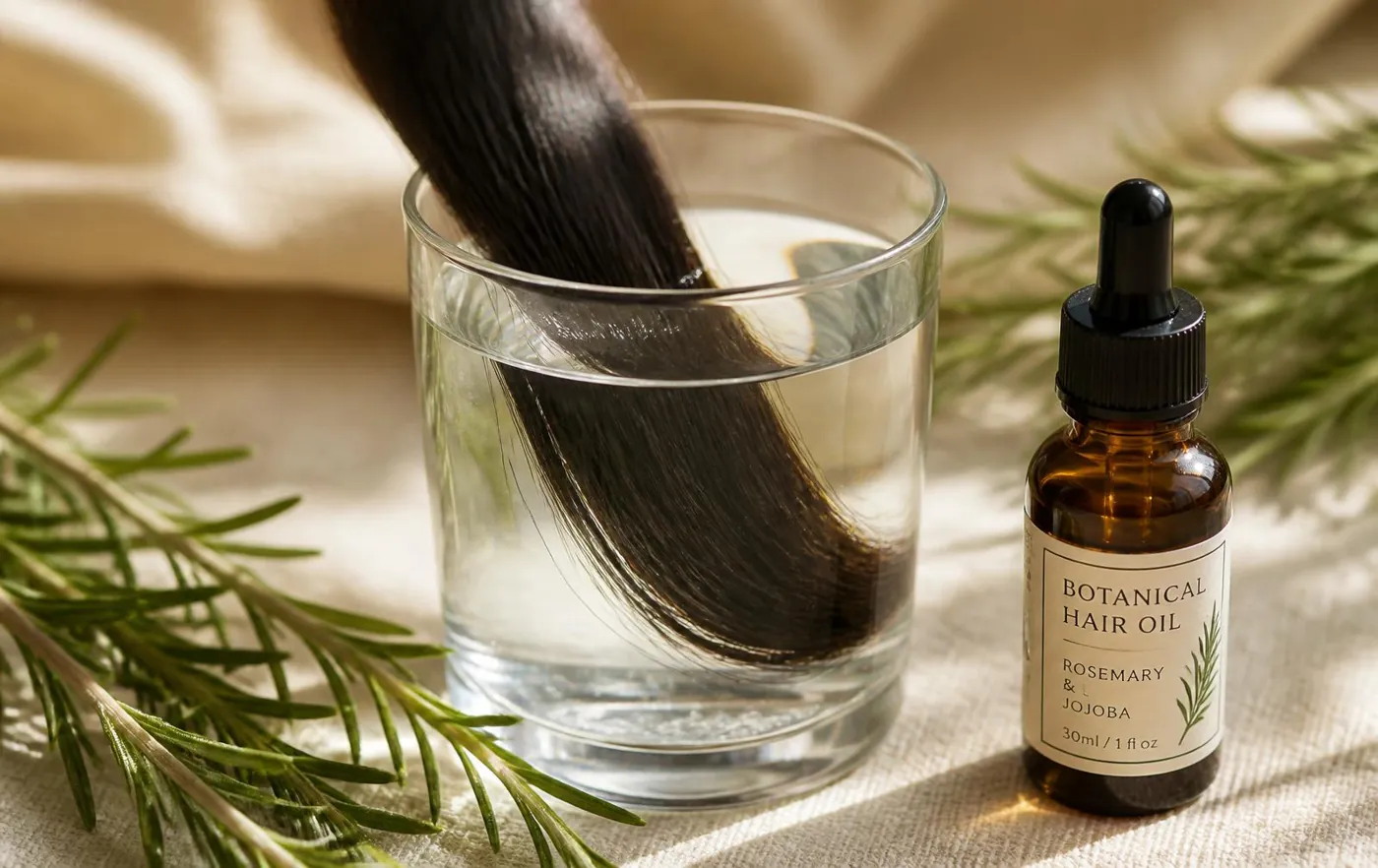
Drop a clean, product-free strand of hair (freshly pulled or shed, not cut) into a glass of room-temperature water and watch for a few minutes. Floats near the top the whole time: low porosity. Floats in the middle and sinks slowly: medium porosity. Sinks quickly to the bottom: high porosity.
Question 2. the shower test
When you first step into the shower, water beads up and hair takes a while to get fully wet: low porosity. Gets wet at a normal pace: medium. Soaks up water almost instantly: high.
Question 3. the drying test
Several hours to air-dry, sometimes overnight: low porosity. A few hours: medium. Under an hour: high.
Question 4. the product test
Oil or leave-in sits on top and feels greasy: low porosity. Absorbs at a reasonable pace: medium. Absorbs almost immediately and hair feels dry again soon after: high.
Question 5. damage and treatment history
Minimal chemical or heat exposure in the last year leans low or medium. Occasional heat styling leans medium. Frequent chemical treatment or heat styling leans high porosity, regardless of your natural baseline.
Scoring: if most of your answers point to one category, that's a reasonable working estimate. If your answers are split. for example, low porosity on the water test but high porosity on damage history. treat your hair as a mixed or transitional type, and lean toward the care approach for whichever category your ends fall into, since ends are usually more porous than roots.
Weekly routines by porosity type
These routines are built around the realities covered above. Pakistani climate, common hard-water exposure, and the actual mechanism of botanical oils. rather than a generic international routine.
Low porosity weekly routine
- Wash day, twice a week: clarifying or gentle sulphate-conscious shampoo, then a light botanical oil on damp hair.
- Between washes: a light water-based leave-in mist if hair feels dry; avoid heavy product.
- Once a week: deep condition with gentle heat (a warm towel wrap) for 20 to 30 minutes so product can penetrate.
- Ongoing: scalp massage two to three times a week with a light botanical oil to support circulation without heavy buildup.
Medium porosity weekly routine
- Wash day, two to three times a week: regular shampoo, then a balanced-weight botanical oil (coconut, almond blend).
- Between washes: light refresh with water or leave-in as needed.
- Once a week: standard deep conditioning treatment, no extra heat required.
- Ongoing: scalp oiling two to three times a week; a monthly clarifying wash if you're in a hard-water area.
High porosity weekly routine
- Wash day, twice a week: gentle, moisture-focused shampoo, then the LOC or LCO method. liquid or leave-in, oil, cream. to layer moisture before sealing.
- Between washes: a rich leave-in or cream on damp hair to replace lost moisture.
- Once a week: protein-moisture balancing treatment. alternate between protein and pure moisture weeks rather than doing both every week.
- Ongoing: heavier sealing oil (castor, coconut) on scalp and lengths; a monthly, or twice-monthly in hard-water areas, chelating clarifying wash.
Myth vs fact on hair porosity
- Myth: porosity is fixed for life by genetics. Fact: genetics set a baseline, but heat, chemical treatment, UV and hard water can shift porosity higher over time.
- Myth: the water glass test is a perfectly accurate diagnostic. Fact: it's a useful but imprecise indicator. hair diameter and surface residue can skew results.
- Myth: high porosity hair just needs more oil. Fact: it needs a moisture step first, then oil to seal it in.
- Myth: low porosity hair doesn't need conditioning. Fact: it needs lighter, more strategically applied conditioning, not none.
- Myth: hard water definitely causes hair loss. Fact: current research doesn't confirm follicle-level hair loss; it does cause buildup, dryness and breakage that can look like thinning.
- Myth: all botanical oils work the same regardless of porosity. Fact: oil weight and application method matter as much as the ingredient list.
City-by-city notes: adjusting for local conditions
Karachi: coastal humidity stays high for much of the year, pushing borderline medium-porosity hair toward the frizz and moisture-loss cycles typical of high porosity behaviour, especially during monsoon months. Parts of the city also deal with harder, more mineral-heavy water, making monthly clarifying washes worth prioritising.
Lahore and Punjab more broadly: hot, dry summers with very high UV intensity are the bigger factor, gradually pushing low-to-medium porosity hair higher through cumulative exposure. Sun protection. a dupatta, scarf or UV-protective hair mist. genuinely matters more here than in cooler regions.
Islamabad and northern areas: slightly cooler overall, but sharper seasonal swings between dry winters and humid summers, meaning routines need more seasonal adjustment. heavier sealing oils in winter, lighter humidity-conscious products in summer.
Interior Sindh and Balochistan: some of the most intense, prolonged heat in the country, often paired with harder groundwater in rural and semi-urban areas. a combination that accelerates porosity changes faster than in coastal or northern regions, making consistent scalp oiling and buildup management especially worthwhile.
None of this changes the underlying porosity science. it changes how quickly your hair is likely to shift toward higher porosity, and how often seasonal adjustments are worth making.
Building a porosity-appropriate botanical routine
- Establish your porosity honestly, using the quiz above and watching how your hair behaves across several wash cycles, not just once.
- Match oil weight and carrier composition to that porosity. lighter blends on damp strands for low porosity, richer castor and coconut-forward blends layered after a water-based step for high porosity.
- Account for your city's climate pattern, increasing sealing oil frequency during dry, high-UV months and shifting lighter during monsoon.
- Manage water hardness proactively. treat a monthly, or twice-monthly, clarifying wash as standard maintenance rather than a reaction to dullness.
- Reassess periodically. Revisiting the quiz every few months keeps the routine matched to the hair you actually have.
This layered approach is also why a genuinely botanical hair oil. with a cold-pressed, mineral-oil-free carrier base and scalp-targeted actives like rosemary. tends to perform more consistently across porosity types and Pakistani conditions than a single mineral-oil-based product marketed as one-size-fits-all. The formula still needs to be applied with porosity in mind, but starting from an oil that can actually penetrate the hair shaft gives every porosity type a genuine advantage.
It's also worth setting expectations honestly: no oil, botanical or otherwise, changes your hair's genetic porosity baseline. What a well-matched routine actually does is reduce the damage-driven creep toward higher porosity. slower cuticle degradation from UV, heat and hard water. while making the most of your hair's natural starting point. That's a meaningfully different, more realistic goal than fixing porosity outright.
Conclusion
Porosity explains far more about why a routine works or doesn't than most product marketing acknowledges. and in Pakistan specifically, that picture is incomplete without accounting for intense UV, dry-to-humid seasonal swings and widespread hard water. Identify your porosity honestly, match oil weight and application method to it, and adjust for your local climate rather than following a routine built for a different environment. If there's one habit worth taking from this guide, it's re-testing rather than assuming: a five-minute water-glass test every few months costs nothing and saves more time, money and frustration than chasing the next trending product.
Choosing the right hair oil in Pakistan
Most of the hair oil in Pakistan sold at general stores is a mineral-oil base with fragrance and colour. It shines the hair, but it cannot reach the shaft, and in hard-water cities it makes buildup worse rather than better.
Dermyra oil takes the opposite approach: cold-pressed carriers, 28 botanicals, nothing synthetic added for shine. Used as a hair fall hair oil it targets the scalp rather than the lengths, and used as a dandruff hair oil it stays light enough to wash out cleanly the same day.
That is the honest test for the best hair oil for your hair: does it wash out fully, does your scalp feel calm the next morning, and can you keep the routine going for a full 8 to 12 week growth cycle. Dermyra hair oil is built to pass all three.
Frequently asked questions
What is hair porosity in simple terms?+
Hair porosity is how easily your hair absorbs and holds onto moisture, determined by how open or tightly sealed the outer cuticle layer is.
What is the best hair oil for low porosity hair?+
Lightweight, fast-absorbing oils. light botanical blends, almond oil, or thinner rosemary-infused formulations. applied in small amounts to damp hair work better than heavy, occlusive oils that sit on the surface and cause buildup.
How do I know if I have low or high porosity hair?+
Combine the water float test, how quickly your hair gets wet in the shower, how fast it air-dries, and how it responds to oil or leave-in products. No single test is perfectly accurate on its own.
Does hard water in Pakistan actually damage hair porosity?+
Hard water doesn't change your genetic porosity baseline, but the mineral deposits it leaves behind make low porosity hair more buildup-prone and can roughen an already-lifted cuticle on medium-to-high porosity hair, worsening dryness and dullness over time.
Can botanical hair oil fix high porosity hair?+
No topical oil reverses structural cuticle damage, but a well-formulated botanical hair oil, used to seal in moisture rather than replace it, can meaningfully reduce further moisture loss, breakage and dullness.
Is the best hair oil in Pakistan the same for every porosity type?+
Not exactly. A genuinely botanical, mineral-oil-free formula benefits every porosity type more than a mineral-oil-based product, but the amount used and how it's applied. damp vs dry hair, light layer vs heavier seal. should match your porosity.
How often should I wash high porosity hair?+
Two to three times a week is a reasonable starting point. Over-washing strips moisture faster than high porosity hair can retain it, while under-washing lets product, dust and sweat accumulate.
Can porosity change with the seasons in Pakistan?+
Porosity itself doesn't change week to week, but hair behaviour shifts significantly between dry summer heat and monsoon humidity, which is why many people need seasonal routine adjustments.