Best Hair Oil in Pakistan: Natural Ingredients for Healthy Hair
Ask ten people in Pakistan what the best hair oil is and you will get ten different answers. coconut, mustard, argan, a family recipe from your grandmother, or whichever bottle is currently trending on Instagram. The truth is that the best hair oil is not defined by a brand name. It is defined by the ingredients inside the bottle and how consistently you use them. This guide walks through why hair oils still matter in a modern routine, what separates a genuinely good formula from a marketing exercise, and the specific botanicals that have earned their place in hair care.
Why people in Pakistan still reach for hair oil
Hair oiling is one of the oldest self-care rituals on the subcontinent, and it has survived for good reason. Our climate is hard on hair. Long, hot summers mean more sweat and more sebum oxidation on the scalp. Hard, mineral-heavy water leaves residue that dulls the shaft and clogs follicles. Air pollution in cities like Lahore, Karachi and Islamabad settles onto the scalp every day. On top of that, most of us blow-dry, straighten or tie our hair back tightly at some point in the week.
A good hair oil does three things at once: it conditions the shaft so it does not snap, it creates a protective film against heat and pollution, and. when it is massaged into the scalp. it improves circulation to the follicle. That last part is where new growth comes from.
What makes a hair oil actually good
Before looking at specific ingredients, it helps to know what to avoid. Most cheap hair oils on the shelf are mineral oil (a petroleum by-product) with a splash of fragrance and a picture of a herb on the label. Mineral oil sits on top of the hair without nourishing it, and heavy fragrances can irritate a sensitive scalp. A good hair oil should tick these boxes:
- Cold-pressed or infused carrier oils. not petroleum derivatives.
- A clear ingredient list, not a vague 'natural blend'.
- Real botanical actives (rosemary, amla, bhringraj, black seed and similar), not just fragrance.
- Light enough to wash out easily so it doesn't weigh hair down or clog follicles.
- Packaged in glass or dark bottles that protect the oil from light and heat.
The rest of this guide focuses on four botanicals that appear again and again in serious hair-care research and in the Ayurvedic and Unani traditions that shaped hair oiling in this region.
Rosemary. the most studied botanical for hair growth
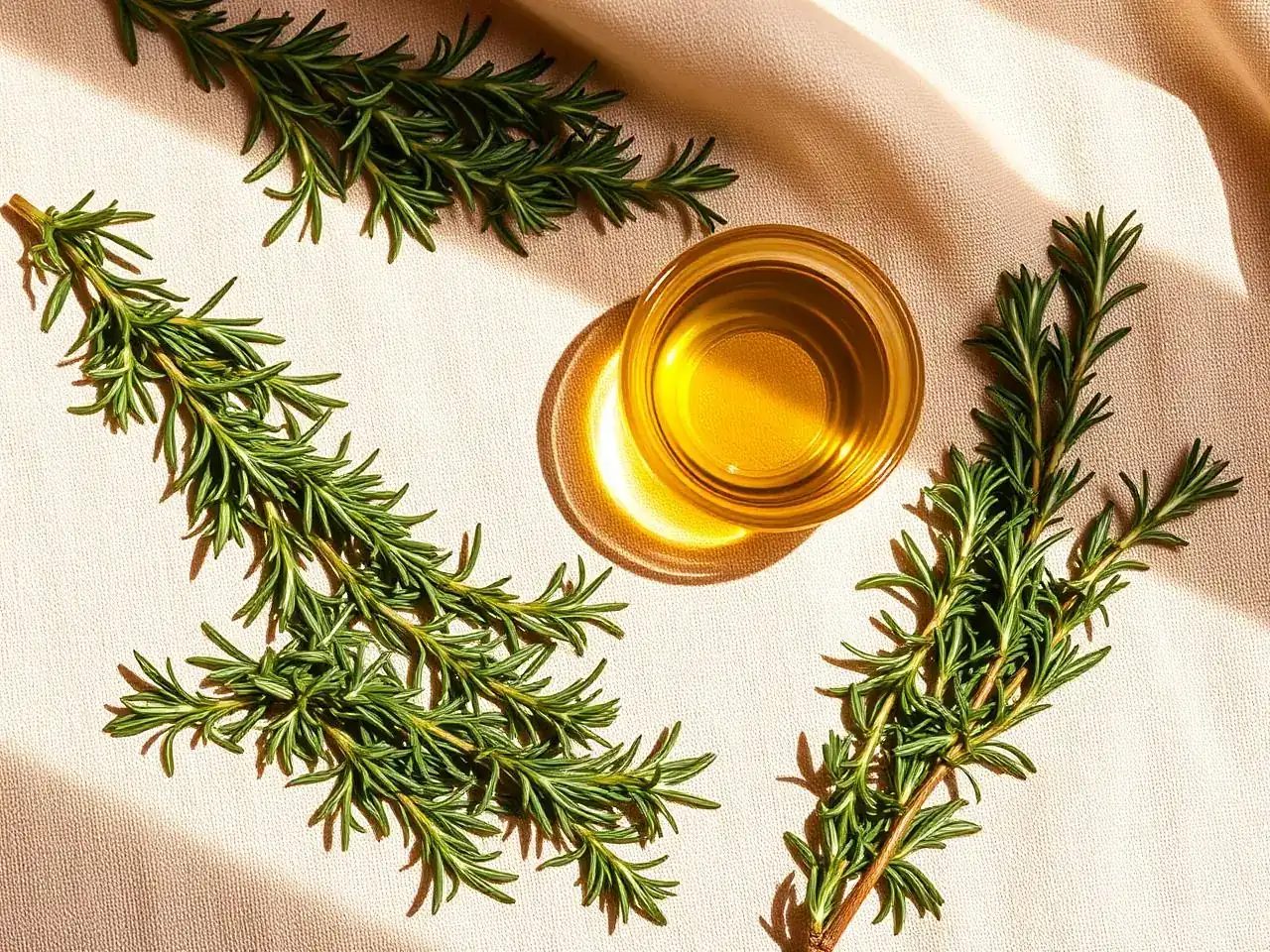
Rosemary is the botanical with the strongest modern evidence for hair growth. A 2015 clinical trial published in Skinmed compared rosemary oil to 2% minoxidil over six months and found comparable hair-count improvements, with less scalp itching in the rosemary group. Its active compounds. carnosic acid, rosmarinic acid and 1,8-cineole. appear to improve scalp micro-circulation and protect follicles from the kind of miniaturisation that leads to thinning.
In practice, rosemary should never be applied to the scalp neat. Pure rosemary essential oil is very concentrated and can irritate skin. In a properly formulated blend it should sit around a 2 to 5% dilution in a carrier oil, which is exactly the range where it becomes effective without becoming harsh.
Amla. vitamin C, colour and strength
Amla (Indian gooseberry) is one of the richest natural sources of vitamin C, and it has been used in hair oils across the subcontinent for centuries. It supports collagen around the follicle, is traditionally credited with slowing premature greying, and gives hair a deeper, glossier finish. When amla is infused into a carrier oil, the result is a slightly dark, fruity oil that feels rich but rinses out cleanly.
Bhringraj. the classical remedy for shedding
If rosemary is the star of the modern research, bhringraj is the classical Ayurvedic answer to the same problem. It has been used for hundreds of years specifically to reduce hair fall and encourage new growth. Modern preliminary studies suggest it may lengthen the growth (anagen) phase of the hair cycle, which is exactly what you want if you are trying to build density.
Black seed. for an irritated scalp
Black seed oil (Nigella sativa, or kalonji) brings a very different benefit. Its active compound, thymoquinone, is a well-documented anti-inflammatory. When shedding is being driven by an irritated, flaky or inflamed scalp. which is more common than most people realise. black seed calms the environment the hair is growing out of. Healthy soil, healthy plant.
Why the botanical route is worth taking
None of these ingredients is a miracle on its own. Real results come from combining a small set of proven botanicals in a carrier that carries them into the scalp without irritating it, and then being patient enough to use that blend consistently for three months. That is the entire logic behind a well-made botanical hair oil: fewer, better ingredients, used regularly.
The trap with 'natural' hair oils in Pakistan right now is that the word natural is doing a lot of work. Look past the label. Read the ingredient list. Look at the colour and smell of the oil itself. A real botanical blend has a warm, herby smell and a slight amber-to-green tint. A fragranced mineral oil smells like perfume and looks like water.
How Dermyra Botanical Hair & Scalp Oil fits in
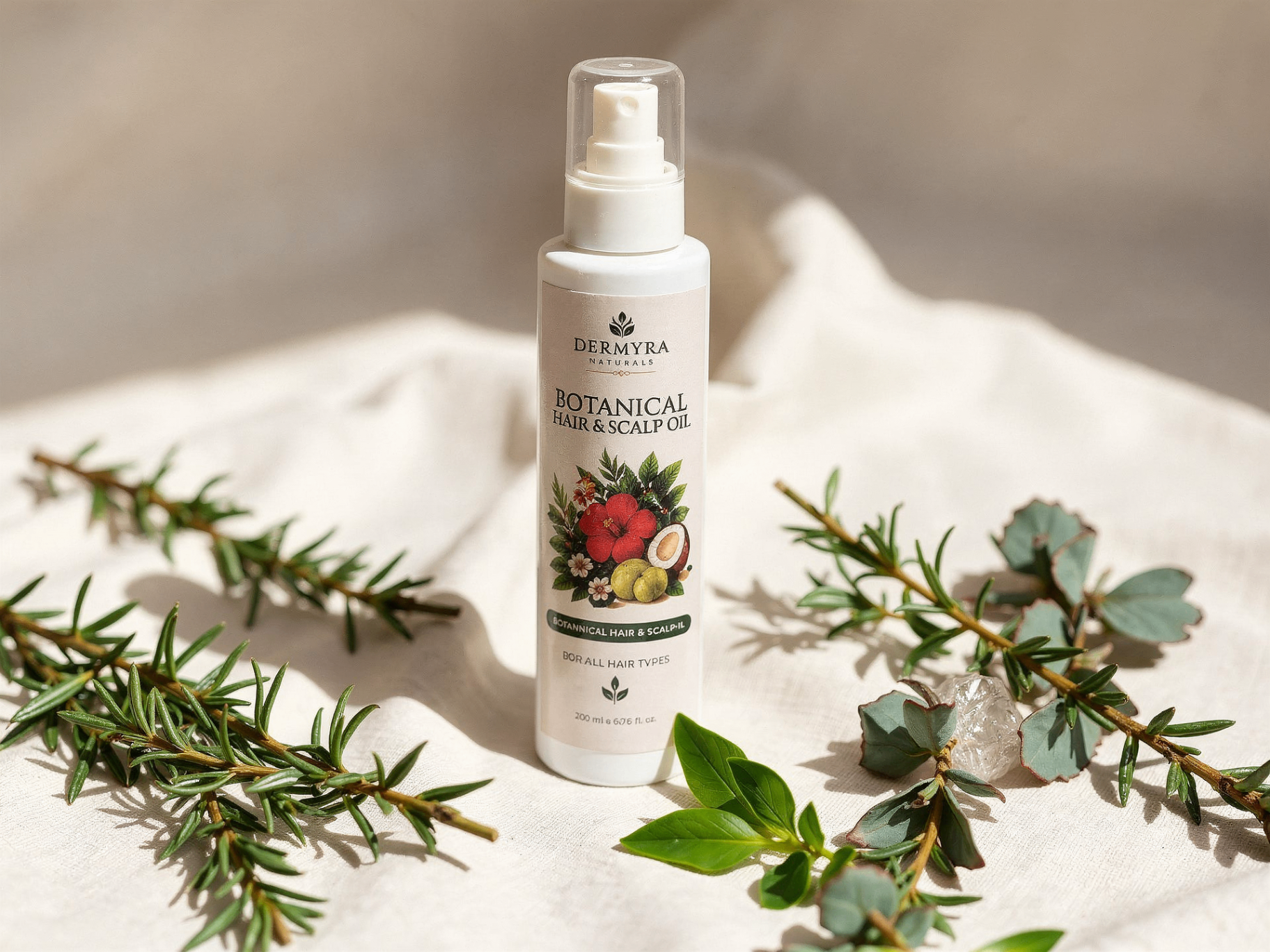
Dermyra Botanical Hair & Scalp Oil was built around exactly this thinking. It combines 28 carefully selected botanical ingredients. including rosemary, amla, bhringraj and black seed. in a cold-pressed carrier blend that is light enough to wash out in a single shampoo. Nothing in the formula is there for fragrance or colour. Every ingredient is there because it has a role, either in the shaft (conditioning, protecting) or in the scalp (circulation, calming, follicle support).
The recommended way to use it is simple: warm a small amount between your palms, part your hair in rows and apply directly to the scalp, massage for three to five minutes, and leave it on for at least an hour or overnight before washing. Two to three times a week is enough. Give it eight to twelve weeks before judging results, because hair grows about a centimetre a month. new growth is only visible after a full cycle.
A simple weekly routine you can actually keep
The best routine is the one you will actually follow. Here is a version that fits into most weeks without becoming a chore:
- Twice a week, warm a small amount of oil between your palms.
- Part your hair in rows and apply directly to the scalp, not the lengths first.
- Massage for three to five minutes with your fingertips, never your nails.
- Leave it on for at least one hour, or overnight if your pillowcase allows it.
- Wash with a gentle, sulphate-free shampoo. One rinse is usually enough.
- Take a monthly photo in the same light. Small changes are hard to notice day to day.
Conclusion
The best hair oil in Pakistan is not a secret formula. It is a small set of proven botanicals in a carrier that treats your scalp gently, used consistently for long enough to matter. Dermyra Botanical Hair & Scalp Oil was designed to be exactly that. a clean, considered blend you can build a long-term routine around.
Where Dermyra hair oil fits in
Everything above works with whatever bottle you already own, but the base matters. Dermyra oil is a cold-pressed, mineral-oil-free blend of 28 botanicals, built for the way people actually use hair oil in Pakistan: a short weekly massage, one to three hours of contact time, then a gentle wash.
If you are shopping for the best hair oil in Pakistan, judge the label rather than the marketing. A genuine hair fall hair oil lists a cold-pressed carrier first, real botanical infusions such as rosemary, amla and bhringraj, and no paraffin. If flaking is your main concern, a dandruff hair oil should also stay light enough not to sit on the scalp between washes.
Dermyra hair oil was formulated around exactly those constraints, which is why the routine in this guide and the oil are designed to be used together.
Frequently asked questions
Which is the best natural hair oil in Pakistan?+
The best natural hair oil in Pakistan is one built around proven botanicals. rosemary, amla, bhringraj and black seed. in a cold-pressed carrier, used two to three times a week. Ingredients matter more than the brand name on the bottle.
How often should I oil my hair?+
For most hair types, two to three times a week is ideal. Daily oiling can weigh hair down and encourage build-up on the scalp, especially in Pakistan's climate.
Can hair oil actually regrow hair?+
A well-formulated botanical oil can meaningfully reduce shedding and support new growth, especially where thinning is driven by poor scalp circulation or inflammation. It is not a medical treatment, but rosemary in particular has clinical evidence behind it.
How long before I see results?+
Most people notice less shedding within four to six weeks and visible density changes after three months of consistent use. Hair grows roughly one centimetre a month, so real change takes a full growth cycle.
Is Dermyra safe for oily scalps?+
Yes. The blend is lightweight and washes out easily. Use a smaller amount, focus on the scalp rather than the lengths, and always wash within 24 hours of application.