Hair Oil in Pakistan: Vatika, Dabur Amla, Arnica, Champi & Rosemary Compared
Walk into any pharmacy in Lahore, Karachi or Islamabad and you will see the same wall of green and gold bottles: Vatika, Dabur Amla, arnica, champi, rosemary. Hair oil is not a trend in Pakistan. it is a weekly ritual passed down for generations. But most people pick a bottle based on habit or advertising, not on what their scalp actually needs. This guide compares the most common hair oils sold in Pakistan, explains what each one is genuinely good at, and shows how to build a routine that works for our water, weather and lifestyle.
Why hair oiling still works in Pakistan
Hard tap water strips the cuticle. Summer sweat and pollution clog follicles. Winter smog dries the scalp. Hair oil solves the parts of this that shampoo cannot. it seals the cuticle, delivers fatty acids to the shaft, and gives the scalp an antimicrobial, anti-inflammatory environment where hair can actually grow. This is why hair oil in Pakistan has stayed relevant while trendier products come and go.
Vatika hair oil
Vatika is the most recognised hair oil brand in Pakistan. Its classic formula is a coconut-oil base infused with amla, henna, brahmi and a handful of other herbs. Coconut is one of the very few oils proven in lab studies to penetrate the hair shaft, so Vatika does a real job of reducing protein loss during washing. The trade-off: coconut solidifies below 24°C, feels heavy on fine hair, and the added fragrance is stronger than most modern users prefer. Best for thick, dry, chemically treated or coloured hair that needs deep conditioning.
Dabur Amla hair oil
Dabur Amla is built around amla (Indian gooseberry) suspended in a mineral-oil base. Amla itself is excellent. high in vitamin C and tannins, it strengthens follicles and supports pigment. The concern is the carrier: mineral oil sits on the surface, does not penetrate the shaft, and can trap sweat and product build-up in Pakistan's humidity. It smells strong, stains pillowcases and takes two shampoos to fully rinse out. Best used occasionally, and much better when amla is delivered in a cold-pressed plant-oil base instead.
Arnica hair oil
Arnica hair oil uses Arnica montana, a mountain flower long used in herbal medicine for circulation and inflammation. Applied to the scalp, it can reduce itch and support blood flow to sluggish follicles. helpful for people dealing with early thinning or seasonal hair fall. Arnica is potent, so it works best as one ingredient in a blend rather than a standalone daily oil. Look for arnica oils that are not purely mineral-oil-based; the botanical only helps if the carrier lets it reach the scalp.
Champi hair oil
"Champi" is not really an ingredient. it is a style. A champi hair oil is any warm-oil scalp massage blend, traditionally built around sesame, coconut or mustard with herbs like brahmi, bhringraj and jatamansi. The massage itself is the point: five minutes of slow fingertip pressure lowers cortisol, boosts circulation and helps the oil reach the follicle. Any well-formulated botanical hair oil can be used as a champi oil if you take the time to massage it in properly.
Rosemary hair oil
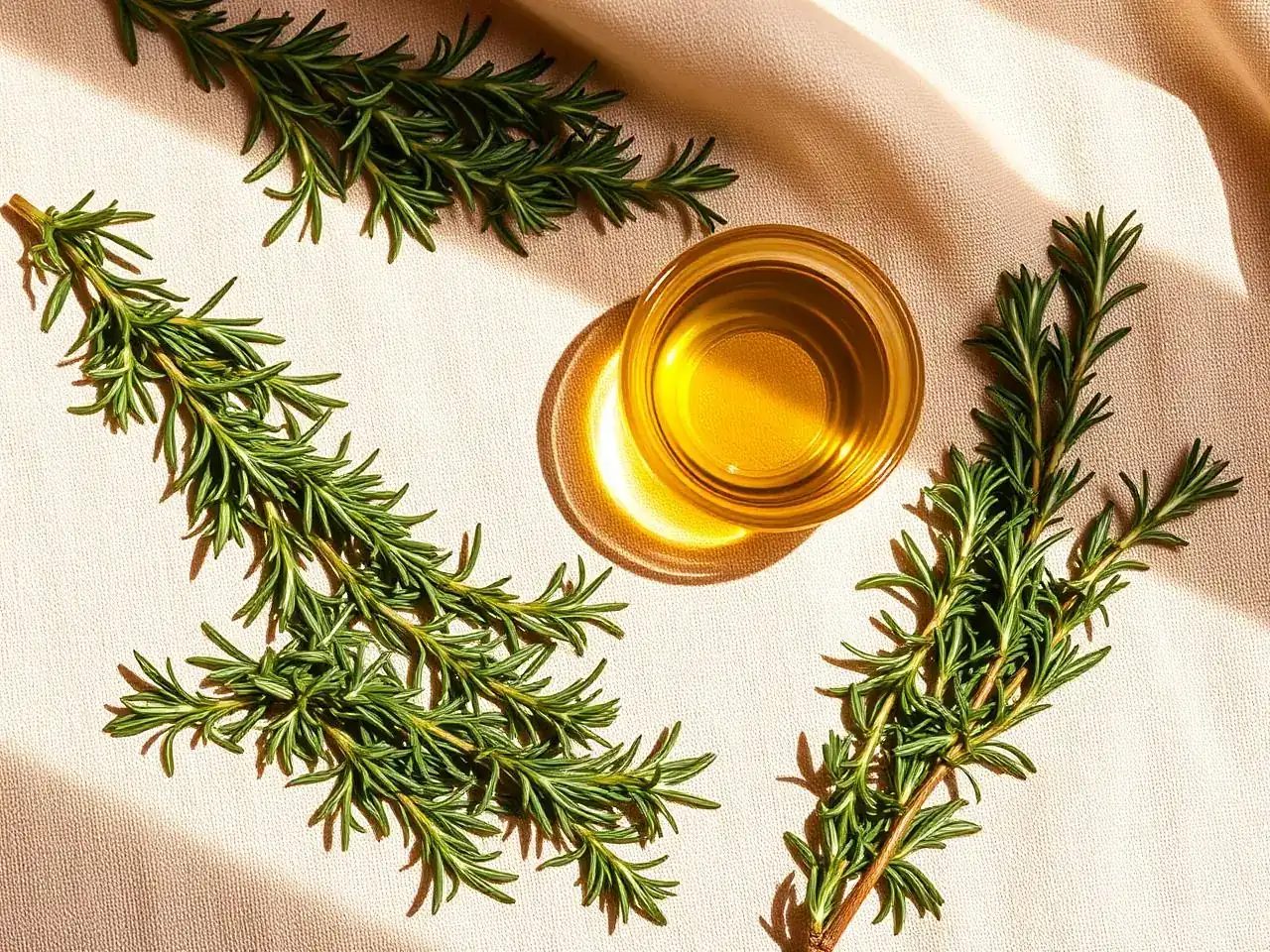
Rosemary is the most researched botanical for hair growth. A 2015 clinical trial found rosemary oil matched 2% minoxidil for new hair growth after six months, with less scalp itching. Pure rosemary essential oil must be diluted (2 to 5%) in a carrier, so most people are better off using a hair oil that already contains a scalp-safe rosemary infusion rather than mixing their own. If you are focused on regrowth and reducing shedding, rosemary belongs in your routine.
How to choose the right hair oil for your scalp
- Thinning or shedding: prioritise rosemary, bhringraj and taramira.
- Dry, brittle, chemically treated hair: prioritise coconut, argan and amla in a cold-pressed base.
- Oily scalp with dandruff: prioritise lighter oils. jojoba, argan and rosemary. and avoid mineral oil.
- Slow growth or early hair loss: prioritise circulation-boosters. rosemary, arnica, taramira and a proper champi massage.
- Grey hair or dull pigment: prioritise amla and bhringraj.
Common hair-oiling mistakes in Pakistan
- Leaving oil in for more than 24 hours. it turns into a scalp build-up problem, not a treatment.
- Applying only to the lengths and skipping the scalp, which is where growth actually happens.
- Using a heavy mineral-oil formula in summer, then blaming hair fall on the weather.
- Washing with a harsh sulphate shampoo that strips the scalp barrier you just fed.
- Switching oils every two weeks. Give any oil three months before you decide.
Where Dermyra fits in
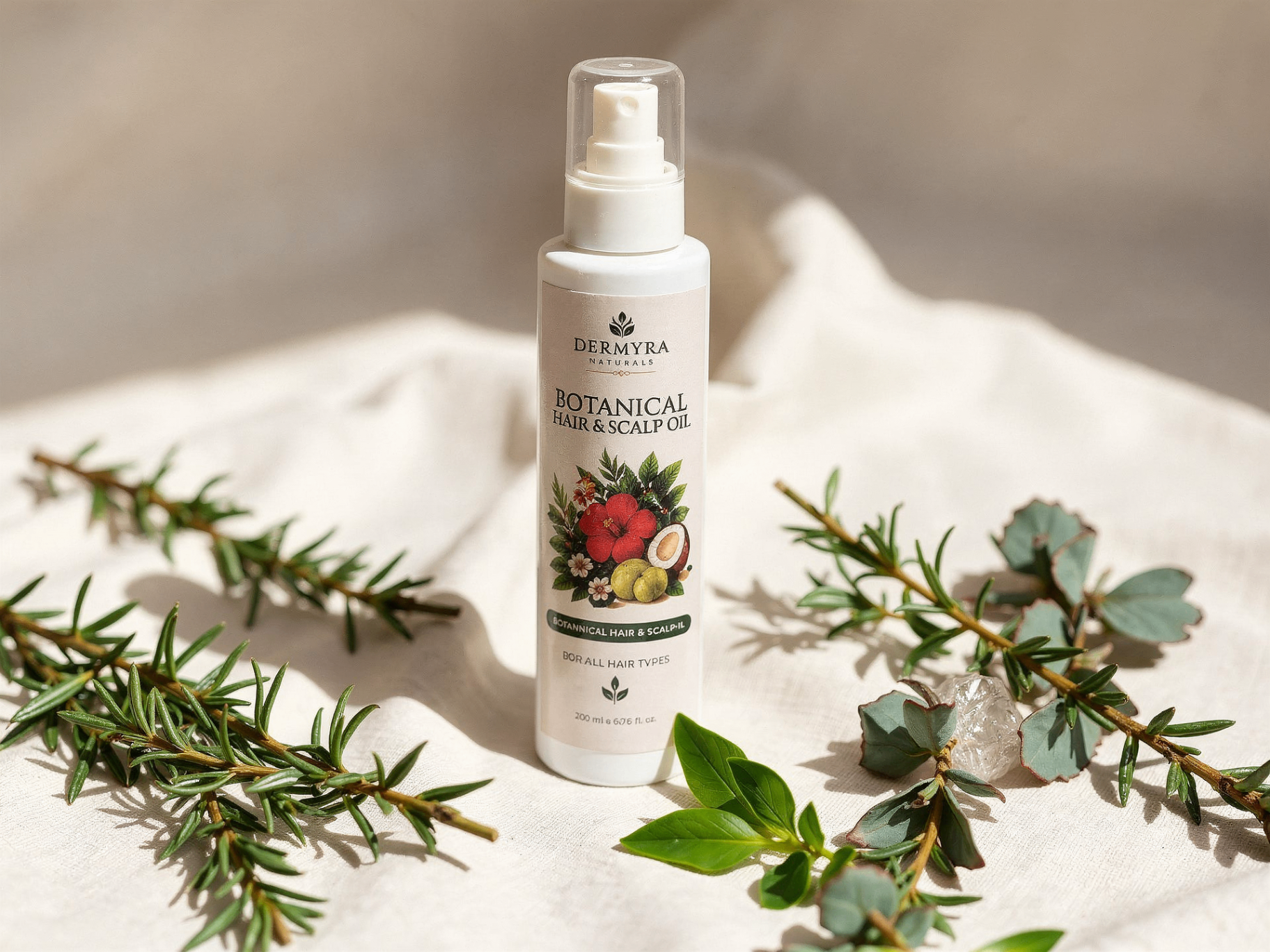
Dermyra Botanical Hair & Scalp Oil was designed for people who have tried Vatika, Dabur Amla, arnica and champi oils and want the benefits of all of them without the mineral oil, heaviness or overpowering fragrance. It is a cold-pressed blend of rosemary, amla, bhringraj, taramira, black seed and argan in a light carrier. no mineral oil, no synthetic fragrance, and light enough to rinse out in a single shampoo. One bottle covers the jobs that used to need three.
Conclusion
Hair oil in Pakistan is not going anywhere. but the era of one heavy, fragranced bottle for everyone is over. Pick your oil based on your scalp, not the ad, and give it a full three-month routine. If you want the benefits of Vatika, Dabur Amla, arnica, champi and rosemary in one clean, cold-pressed formula, that is exactly what Dermyra Botanical Hair & Scalp Oil was built for.
How Dermyra oil supports this routine
A routine only works if the oil behind it can do the job. Dermyra hair oil is a 28-botanical, cold-pressed blend made for Pakistani conditions: hard water, heat, dust and the weekly champi habit most households already keep.
As a hair fall hair oil it concentrates rosemary, amla and bhringraj at the scalp, where shedding is actually decided. As a dandruff hair oil it avoids the heavy paraffin bases that trap flakes and sweat against the skin. And as an everyday hair oil in Pakistan it is deliberately light, so 5 to 15 ml per session is genuinely enough.
If you are comparing options for the best hair oil in Pakistan, compare ingredient lists side by side — that comparison is the reason Dermyra oil exists.
Frequently asked questions
Which is the best hair oil in Pakistan?+
The best hair oil in Pakistan is one that suits your scalp and is used consistently. For growth and shedding, rosemary-based blends perform best; for deep conditioning, cold-pressed coconut with amla; for early thinning, a botanical blend with rosemary, bhringraj and taramira like Dermyra.
Is Vatika hair oil better than Dabur Amla?+
Vatika uses a coconut-oil base, which actually penetrates the hair shaft, so it conditions better than Dabur Amla, which is mostly mineral oil sitting on the surface. Neither is ideal for oily scalps in Pakistan's humidity.
Is arnica hair oil good for hair fall?+
Arnica can help reduce hair fall linked to poor scalp circulation and inflammation. It works best as one ingredient in a well-formulated blend, not as a standalone daily oil.
What is champi hair oil?+
Champi refers to the traditional warm-oil scalp massage, not a specific ingredient. Any nourishing botanical hair oil. massaged into the scalp for 5 minutes. is a champi oil.
How often should I oil my hair in Pakistan?+
Two to three times a week is ideal. Daily oiling in Pakistan's climate usually creates build-up, sweat lock-in and more hair fall, not less.
Does rosemary hair oil really work?+
Yes. A 2015 clinical trial found rosemary oil produced hair count results comparable to 2% minoxidil after six months of consistent use.