
Hair Growth
Rosemary
Rosmarinus officinalis
The most clinically-studied botanical for hair growth.
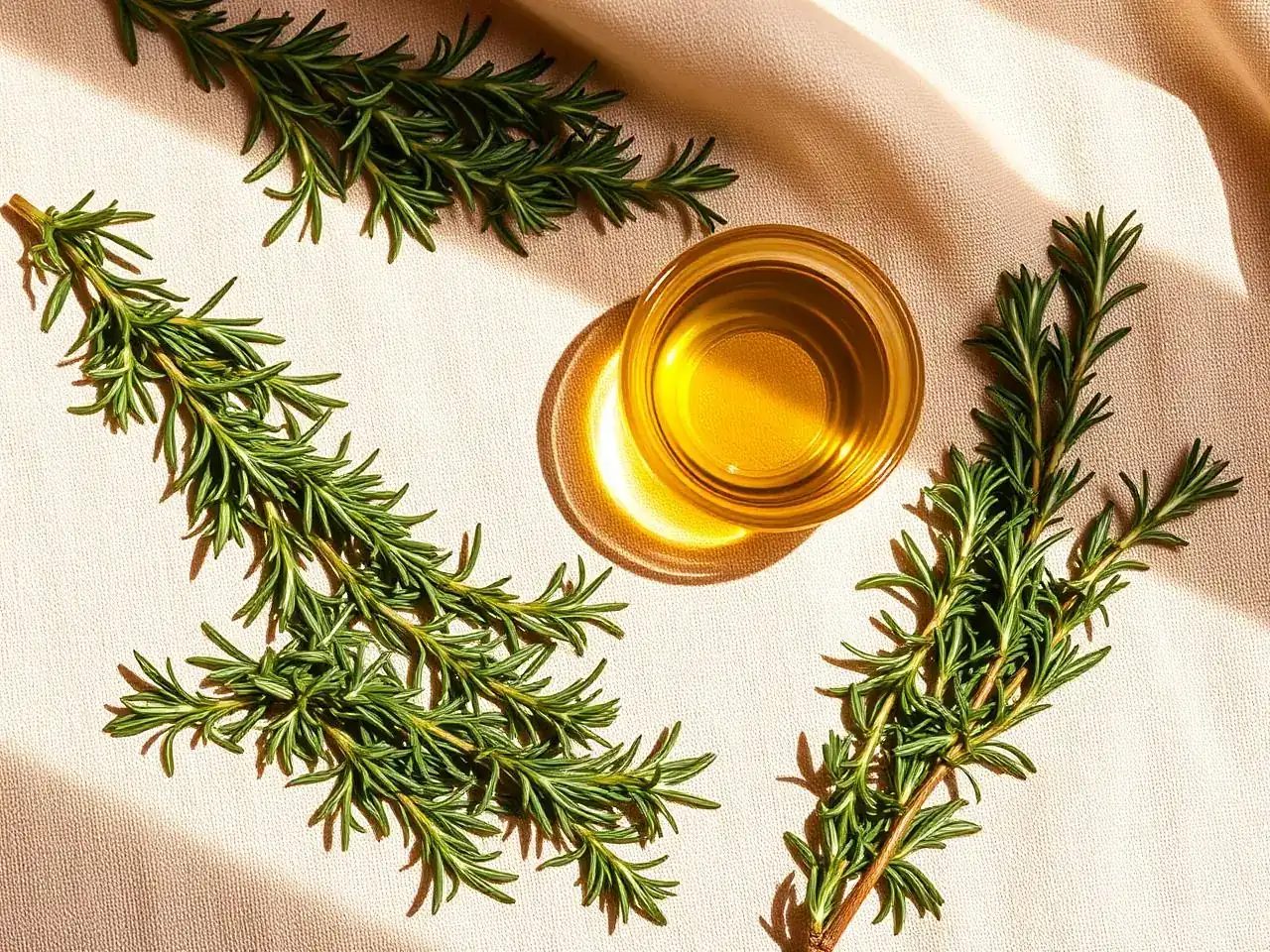
Rosemary (Rosmarinus officinalis) is the single most-searched hair growth ingredient in Pakistan — and for good reason. A landmark 2015 clinical trial found rosemary oil comparable to 2% minoxidil for hair count over six months, without the itch or dryness minoxidil users often report. It's the botanical every serious hair oil in Pakistan is now built around.
Key benefits
Stimulates scalp circulation
Rosemary's active compounds (carnosic acid, 1,8-cineole) increase microcirculation to the follicle, delivering more oxygen and nutrients to the hair bulb.
Comparable to minoxidil in a clinical trial
A 2015 randomized trial (SKINmed Journal) showed rosemary oil matched 2% minoxidil for hair count at six months — with significantly less scalp itch.
Reduces DHT-linked shedding
In-vitro work suggests rosemary inhibits 5-alpha reductase, the enzyme that converts testosterone into DHT — the hormone behind pattern hair loss.
Calms an irritated scalp
Anti-inflammatory and mildly antimicrobial, rosemary helps quiet the low-grade scalp inflammation that keeps follicles from producing thick hair.
How rosemary oil actually works on hair
Rosemary's effect on hair growth is not a marketing claim — it's one of the few botanicals with a real published clinical trial behind it. The trial ran for six months, compared rosemary oil against 2% minoxidil, and found no statistically significant difference in hair count between the two groups. The rosemary group also reported less scalp itching.
The mechanism appears to be twofold: rosemary boosts microcirculation at the scalp (more blood flow means more nutrients reaching the follicle), and its active compounds appear to inhibit DHT, the hormone that miniaturises follicles in pattern hair loss.
Buying rosemary oil in Pakistan
Most 'rosemary oil' sold on Daraz and pharmacy shelves in Pakistan is either heavily diluted or an essential oil sold without a carrier — which is unsafe to apply directly to the scalp. Pure rosemary essential oil at scalp-strength (0.5%–2%) can burn.
A proper botanical hair oil dilutes rosemary essential oil in a cold-pressed carrier (sesame, sweet almond, coconut) and pairs it with complementary ingredients like amla, bhringraj and black seed. That's the format most Pakistani customers actually need.
What the evidence actually says
The 2015 Panahi et al. trial is the reference study — 100 participants, six months, published in SKINmed. Since then, several follow-up in-vitro and animal studies have supported the mechanism (increased microcirculation, DHT inhibition). It's not a miracle cure — nothing regrows dead follicles — but for active thinning and diffuse shedding, rosemary is one of the very few botanicals with published human data.
How to use
- Warm 5–10 ml of the blend between your palms.
- Massage into the scalp for 5 minutes — focus on thinning areas.
- Leave on for at least 1 hour, or overnight for a deep treatment.
- Wash out with a gentle sulfate-free shampoo.
- Repeat 2–3 times a week for 8–12 weeks before judging results.
Pairs well with
Frequently asked questions
How long does rosemary oil take to show results for hair growth?
Most users see reduced shedding within 4–6 weeks and visible regrowth around 12 weeks. The clinical trial measured its endpoint at 6 months — hair grows slowly, so consistency matters more than intensity.
Can I apply pure rosemary essential oil to my scalp?
No — pure rosemary essential oil is far too concentrated and can burn. It must be diluted to 0.5–2% in a carrier oil. A pre-blended botanical hair oil handles this safely for you.
Is rosemary oil safe during pregnancy?
Concentrated rosemary essential oil is generally not recommended during pregnancy. If you're pregnant or breastfeeding, consult your doctor before using any medicated or high-concentration formula.
Does rosemary oil work for beard growth too?
The same mechanisms (circulation, DHT modulation) apply to facial hair follicles, and it's commonly used off-label for beards. Evidence is largely anecdotal outside the scalp trial.