Hair Oiling Mistakes Pakistanis Make (And How to Fix Them)
Key takeaways
- Dose, timing, technique and removal cause more oiling problems than the oil itself.
- 5 to 15 ml is enough for most heads. more oil mainly makes the wash harder.
- One to three sessions a week beats one long Sunday session followed by six dry days.
- One to three hours of contact time is enough; overnight is optional, not compulsory.
- Hard water is why oiled hair here often feels coated and dull after washing.
- Give any routine 8 to 12 weeks. hair grows on a monthly cycle, not a weekly one.
Oiling is the one hair habit almost every Pakistani household already has. Most of us were oiled as children before we had any say in it, and the ritual gets passed down with the technique intact. amount, timing, heat, everything. The problem is that the habit was handed down, but the conditions changed. Our water is harder, our air is dustier, our shampoos are stronger, and the bottles on the shelf are rarely what their labels suggest.
So when someone tells you oiling made their hair fall worse, or that it did nothing for them in a month, the oil usually isn't the culprit. The routine around it is. This guide walks through the ten mistakes that come up most often here, what each one actually does to your scalp and hair, and the specific fix. Nothing here requires new equipment or an expensive routine; most of it is about doing less, more carefully.
Why generic oiling advice fails in Pakistan
Most oiling advice online is written for temperate climates with soft municipal water and low airborne dust. Almost none of those conditions hold across Punjab, Sindh or KP for most of the year, and that mismatch is why an internationally popular routine can genuinely underperform here.
- Hard water. groundwater across much of Punjab and parts of Karachi carries high calcium and magnesium, which leaves a chalky film on the shaft with every wash and makes oiled hair feel coated rather than clean.
- Heat and sweat. above 40°C for months, a sweaty scalp mixes with oil and dust and turns into a plug at the follicle opening rather than a treatment.
- Dust and smog. fine particulates settle on an oiled scalp within minutes outdoors, which is why oiling before leaving the house is counterproductive.
- Head coverings. helmets, hijabs and dupattas trap heat and oil against the scalp, which is fine on a clean scalp and a problem on an oily one.
- Product labelling. many oils sold locally as amla, rosemary or bhringraj are mineral-oil bases with fragrance and colour, which sit on the hair rather than penetrating it.
Mistake 1: using far too much oil
The most common single error. Hair that is dripping is not better treated; it is just harder to wash. The scalp can only absorb so much, and everything beyond that sits on the surface collecting dust until you shampoo it out. often with two or three aggressive washes that strip more than the oil ever added.
The fix: about 5 ml for short or fine hair, 10 ml for medium length, up to 15 ml for long or thick hair. That is roughly one to three teaspoons. Warm it between your palms, work it into the scalp in sections first, and only then run whatever remains on your hands down the lengths.
Mistake 2: oiling a sweaty, dusty or flaky scalp
Oiling on top of a week of sweat, dust and dead skin does not clean anything. it seals it in. In Karachi or Lahore summers this is a reliable route to itching, folliculitis-style bumps and worsened flaking, and it is one of the main reasons people conclude that oil causes hair fall.
The fix: oil a scalp that is clean or at most one day out from a wash. If your scalp is actively flaking or sore, treat that first with a gentle wash routine and reintroduce oil once the irritation settles.
Mistake 3: leaving oil in for days, or Sunday-only oiling
Two versions of the same mistake. Some people oil on Sunday night and wash on Wednesday, letting oil, dust and sweat sit together for days. Others do one heavy session a week and nothing in between, expecting a single soak to make up for it.
The fix: one to three shorter sessions a week, each with one to three hours of contact time before washing. Consistency does far more than duration. Overnight oiling is optional and best reserved for dry, coarse hair, on a clean scalp, with a towel or old pillowcase.
Mistake 4: scratching with nails instead of massaging
Vigorous champi with fingernails feels satisfying and does more harm than good. Nails break the skin barrier on the scalp and can snap hair at the root, especially on hair that is already shedding. Aggressive rubbing along the lengths also roughens the cuticle and creates tangles that you then rip through with a comb.
The fix: use the pads of your fingers, small circular movements, firm enough to move the scalp over the skull rather than to scrape it. Five to ten minutes is plenty. Work the lengths by smoothing, not rubbing.
Mistake 5: overheating the oil
Warm oil spreads better and feels good on a cold day. Boiling oil, straight off the stove or microwaved until it hisses, is a different thing: it can scald the scalp, and heating a botanical blend hard also degrades the delicate aromatic compounds you paid for.
The fix: stand the bottle or a small bowl in warm water for a few minutes. It should feel comfortably warm on the inside of your wrist, never hot. Never heat an oil containing essential oils directly on a flame.
Mistake 6: buying by the name on the front of the bottle
A large share of oils sold here as amla, rosemary or bhringraj are mineral oil (often listed as paraffinum liquidum or white petrolatum) with fragrance, colour and a token botanical extract. Mineral oil coats the hair and gives instant shine, which is why it sells, but it does not penetrate the shaft and it makes buildup worse in hard-water areas.
The fix: read the ingredient list on the back, not the claim on the front. Look for a cold-pressed carrier base such as sesame, coconut, almond or castor listed first, real botanical infusions rather than a single 'fragrance' entry, and an amber or dark bottle that protects the oil from light.
This is also the difference people notice when they move from a supermarket oil to a genuinely botanical blend: the same technique starts working better, because the base can actually reach the hair shaft instead of sitting on top of it.
Mistake 7: blaming the oil when hard water is the problem
You oil, you wash, and the hair still feels coated, dull and slightly rough. That is often the mineral film left by hard water reacting with shampoo and oil, not residue from the oil itself. It is why the same routine behaves differently at home and at a relative's house in another city.
The fix: use a gentle sulphate-free shampoo for regular washes and a clarifying wash every two to four weeks to lift mineral buildup. A final rinse with filtered or boiled-and-cooled water, or a diluted apple cider vinegar rinse once a fortnight, noticeably improves how the hair feels after oiling.
Mistake 8: applying undiluted essential oils
Pure rosemary, tea tree, peppermint or clove oil applied neat to the scalp is a common home remedy and a common cause of burning, redness and contact dermatitis. Stronger is not faster here; an irritated scalp sheds more, not less.
The fix: keep essential oils at roughly 1 to 3 percent of the total blend. that is about 3 to 9 drops in 15 ml of carrier oil. Patch test any new blend behind the ear or on the inner forearm for 24 hours before using it on the whole scalp. A properly formulated blend has already done this dilution for you.
Mistake 9: oiling right before dust, gym or a head covering
Oiling and then heading out on a bike, into a gym session, or straight under a helmet or hijab traps oil, sweat and particulates against the scalp for hours. This is the single most avoidable local trigger for itch and clogged follicles.
The fix: oil when you are staying in and can wash within a few hours. evening at home before a wash, or a weekend morning. If you must cover your head, wait until the oil has been absorbed for at least an hour and use a clean cotton scarf rather than synthetic fabric.
Mistake 10: quitting after three weeks
Hair grows roughly one centimetre a month, and shed hair that is already in the resting phase will still fall for weeks after you improve your routine. Judging an oil after three weeks tells you almost nothing except how your scalp tolerates it.
The fix: commit to 8 to 12 weeks with a consistent routine, and track it honestly. take a photo of your hairline and parting in the same light each month, and count how much hair you find in the drain on wash day rather than relying on impressions.
A corrected weekly routine
Put the fixes together and the routine is simpler than what most people are already doing. Adjust the frequency to your scalp, not to a rule.
- Oily scalp. once or twice a week, 5 to 10 ml, scalp-focused, 1 hour contact time, wash the same day.
- Normal scalp. twice a week, 10 ml, scalp and mid-lengths, 1 to 2 hours, wash the same day.
- Dry or coarse hair. two or three times a week, 10 to 15 ml, lengths and ends included, 2 to 3 hours or overnight occasionally.
- Flaky or itchy scalp. once a week on a clean scalp, 5 ml, 1 hour, paired with a gentle anti-flake wash.
- Section dry, clean hair into four parts.
- Warm the oil in your palms and apply along the partings with fingertips.
- Massage in small circles for 5 to 10 minutes, no nails.
- Smooth what is left on your hands through the lengths and ends.
- Leave for 1 to 3 hours; cover with a clean cotton scarf if you like.
- Shampoo out fully. apply shampoo to the oiled scalp before adding water for an easier first lather.
- Condition mid-lengths and ends, and finish with the coolest rinse you can tolerate.
Read next
Conclusion
Nothing in this list requires you to abandon a habit your family has kept for generations. It just asks you to adjust it for the water, dust and heat we actually live with: less oil, on a clean scalp, worked in with fingertips rather than nails, washed out properly the same day, and repeated consistently for a full growth cycle before you judge it. Do that with an honest, mineral-oil-free botanical oil and the routine you already have starts doing what it was supposed to do all along.
Looking for the best hair oil in Pakistan?
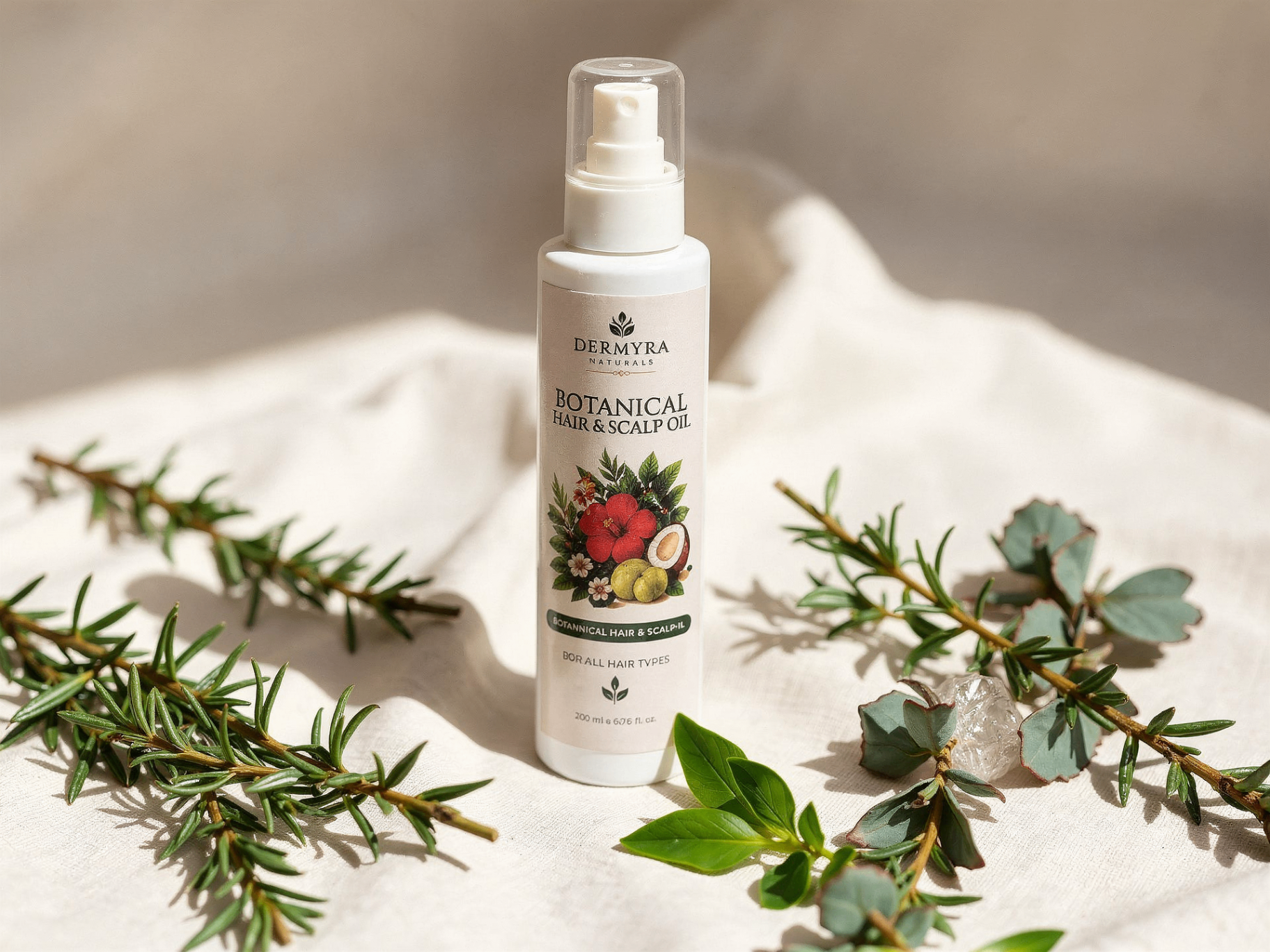
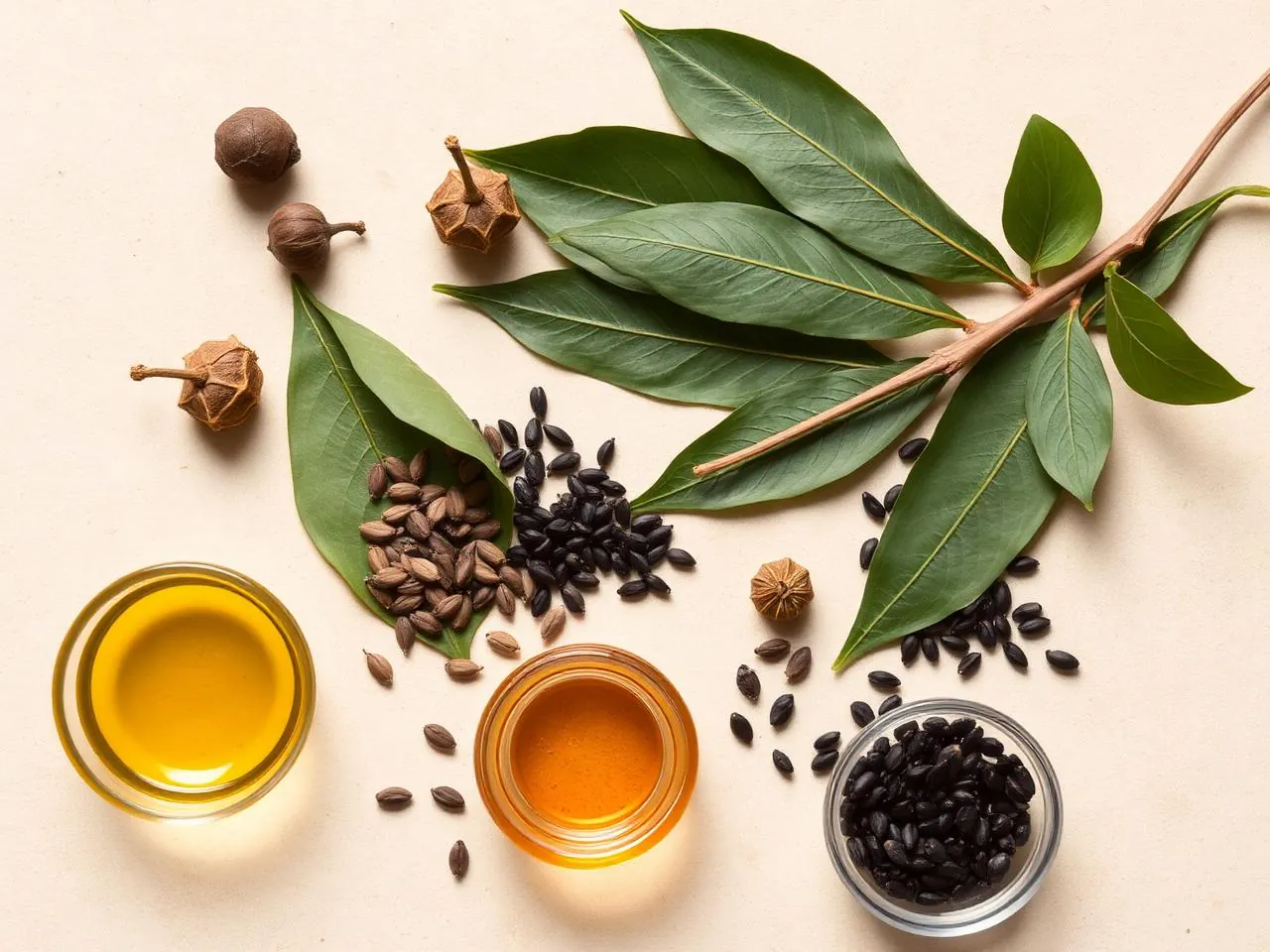
The advice in this article is product-neutral, but the results depend on what is in the bottle. Dermyra oil is a cold-pressed botanical blend of 28 herbs including rosemary, amla and bhringraj, with no mineral oil, no synthetic fragrance and no colour added.
People usually come to it for one of two reasons: they want a hair fall hair oil that targets the scalp instead of coating the lengths, or they want a dandruff hair oil that calms flaking without leaving residue behind. The same formula handles both because the base is light and the botanicals are infused rather than sprayed on.
For anyone still deciding which hair oil in Pakistan to buy, that combination — cold-pressed base, real infusions, honest labelling — is the short version of what to look for, and what Dermyra hair oil delivers.
Frequently asked questions
Kya hair oil se baal jhartay hain?+
Oil itself does not cause hair fall. What causes shedding is oiling a dirty or irritated scalp, leaving oil in for days, scratching with nails, and then scrubbing it out with a harsh shampoo. On a clean scalp, in the right amount, oiling does not increase hair fall.
How often should I oil my hair in Pakistan?+
One to three times a week suits nearly everyone. Oily scalps do better with once or twice weekly, dry and coarse hair can handle three sessions. Daily oiling without daily washing invites buildup, especially in dusty cities.
Should I leave hair oil overnight?+
It is optional, not compulsory. One to three hours of contact time gives most of the benefit. Overnight oiling suits dry, coarse hair on a clean scalp, but it is a poor idea for oily or flake-prone scalps.
How much oil should I use in one session?+
Roughly 5 ml for short or fine hair, 10 ml for medium length and up to 15 ml for long or thick hair. If your hair is dripping, you have used too much.
Why does my hair feel sticky even after washing out the oil?+
Usually a combination of too much oil and hard water. Apply shampoo to the oiled scalp before wetting it, use a clarifying wash every two to four weeks, and reduce the amount of oil per session.
Can I oil my hair before going to the gym or wearing a helmet?+
Better not to. Oil plus sweat plus trapped heat clogs follicles and triggers itching. Oil when you are at home and can wash within a few hours.
Is it safe to put pure rosemary oil directly on the scalp?+
No. Undiluted essential oils commonly cause burning and irritation. Keep them at about 1 to 3 percent of a carrier oil blend, or use a formula where that dilution is already done.
How long before I see results from oiling?+
Give it 8 to 12 weeks. Hair grows about a centimetre a month, and hair already in the shedding phase will keep falling for several weeks regardless of what you change.