Herbal Hair Oil in Pakistan: How to Tell the Real Thing From Marketing Hype
Walk into any pharmacy or scroll through Daraz for five minutes and you'll find dozens of bottles calling themselves herbal, organic, natural or ayurvedic hair oil. Green packaging, leaf illustrations, a list of trending ingredients on the label: amla, bhringraj, rosemary. It all looks the same.
Most of it isn't the same. A lot of what's sold as herbal hair oil in Pakistan is mineral oil or a cheap carrier base with a small amount of herbal extract and fragrance added on top. enough to justify the label, not enough to do anything for your scalp. If you've tried a few of these and felt nothing changed, that's probably why.
This isn't a sales pitch dressed up as an article. It's a straightforward answer to three questions: what actually makes a hair oil herbal, how do you tell a real one from a marketing exercise, and why hair fall in Pakistan has causes that no bottle alone can fix.
Why hair fall behaves differently in Pakistan
Before you blame the oil, look at the conditions it has to work in. Hair problems here are shaped by three local realities that most imported advice ignores.
Heat and humidity
In Karachi and Lahore summers, the scalp sweats for months at a time. Sweat plus sebum plus dust is a build-up problem, and build-up around the follicle is one of the most common triggers for itching, flaking and shedding. This is also why heavy daily oiling backfires in our climate: the oil traps sweat instead of conditioning the scalp. Two to three sessions a week, washed out properly, beats daily application every time.
Hard water
Most municipal and borewell water across Punjab and Sindh is hard, high in calcium and magnesium. Those minerals bind to the hair shaft, leave a film that shampoo struggles to clear, and make hair feel rough, dull and brittle even when your routine is otherwise fine. Hard water doesn't pull hair out of the root, but brittle hair snaps mid-shaft, and to you that looks identical to hair fall.
Dust, sun and low water intake
Airborne dust in most Pakistani cities settles on the scalp daily, UV exposure dries the lengths, and chronically low water intake in hot months shows up in the hair before it shows up anywhere else. A good herbal oil helps with dryness and scalp condition. It cannot outrun a scalp that is never properly cleansed.
Practical version: cleanse two to three times a week with a mild shampoo, do a final rinse with filtered or boiled-and-cooled water if your area is very hard, and use oil as a pre-wash scalp treatment rather than a leave-in you never remove.
What herbal hair oil actually is
A genuine herbal hair oil is built around two things: the extraction method and the ingredient concentration.
Extraction method
Real herbal oils are usually cold-pressed. the herbs and seeds are pressed at low temperatures to preserve the active compounds (vitamins, fatty acids, antioxidants) that actually affect hair and scalp health. Heat-processed or solvent-extracted oils are cheaper to produce but strip out a lot of what makes the ingredient useful in the first place.
Concentration
A bottle can legally say "with rosemary" if it contains a trace amount of rosemary oil in a base of mineral oil or liquid paraffin. That's not an herbal oil, it's a mineral oil with a botanical footnote. A real herbal formulation is built from the plant-based ingredients themselves, not diluted around them.
Neither of these things shows up in a product photo. That's exactly why so many brands can get away with the label.
How to identify real vs fake
Checking the ingredient list for mineral oil is the advice everyone gives, and it is correct as far as it goes. But brands have adapted: they now list plant oils first and hide the problem elsewhere. These are the checks that still work in 2026.
- Read the ingredient list, not the front label. If mineral oil, liquid paraffin or paraffinum liquidum appears near the top, the herbal claim is doing more marketing work than formulation work. On a genuine herbal oil the plant oils themselves (sesame, almond, coconut, castor) should be the base.
- Ask where the hero ingredient sits. A label that lists 28 herbs is meaningless if 26 of them appear after the fragrance. Ingredients are listed in descending order by weight, so anything below the fragrance or preservative is present in fractions of a percent.
- Ask for the actual percentage, not the ingredient name. Message the brand and ask what percentage of the bottle is rosemary, or amla, or bhringraj. A brand that formulates honestly can answer in one line. A brand reselling a white-label base usually cannot answer at all.
- Ask where it was pressed and in what batch size. Cold-pressed, small-batch production has a real location and a real batch number. Ask for both. Repackaged bulk oil rarely has an answer that survives a follow-up question.
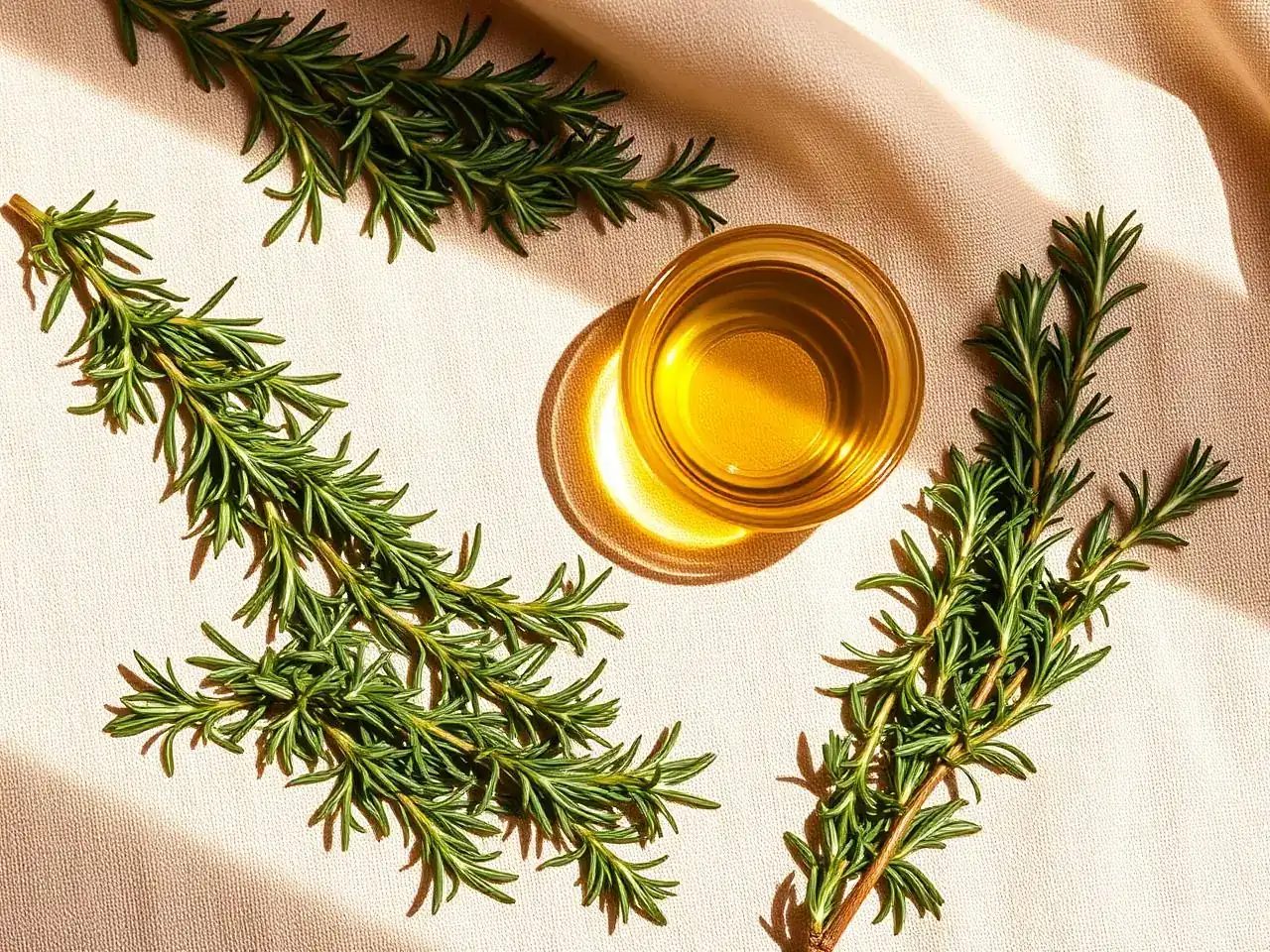
- Ask for an unedited photo of the oil in daylight, poured out. Colour and viscosity are hard to fake. Genuinely herb-infused oil is cloudy, deep amber to green, and carries visible botanical sediment. Water-clear oil with a perfect gloss is usually a refined or mineral base with fragrance.
- Check the shelf life claim. Real cold-pressed plant oils oxidise. A herbal oil claiming three years of stability with no antioxidant or preservative system is either heavily refined or not telling you the whole formula.
- Smell it. A real herbal oil smells like the herbs it contains: earthy, slightly bitter notes from amla or bhringraj, a clean pine-like note from rosemary. If a bottle smells overwhelmingly of synthetic perfume and nothing else, that fragrance is often masking a plain oil base.
- Be skeptical of numeric hype. "5x growth", "stops hair fall in 10 days" and similar claims are not formulation claims, they are advertising. Hair grows in cycles measured in months.
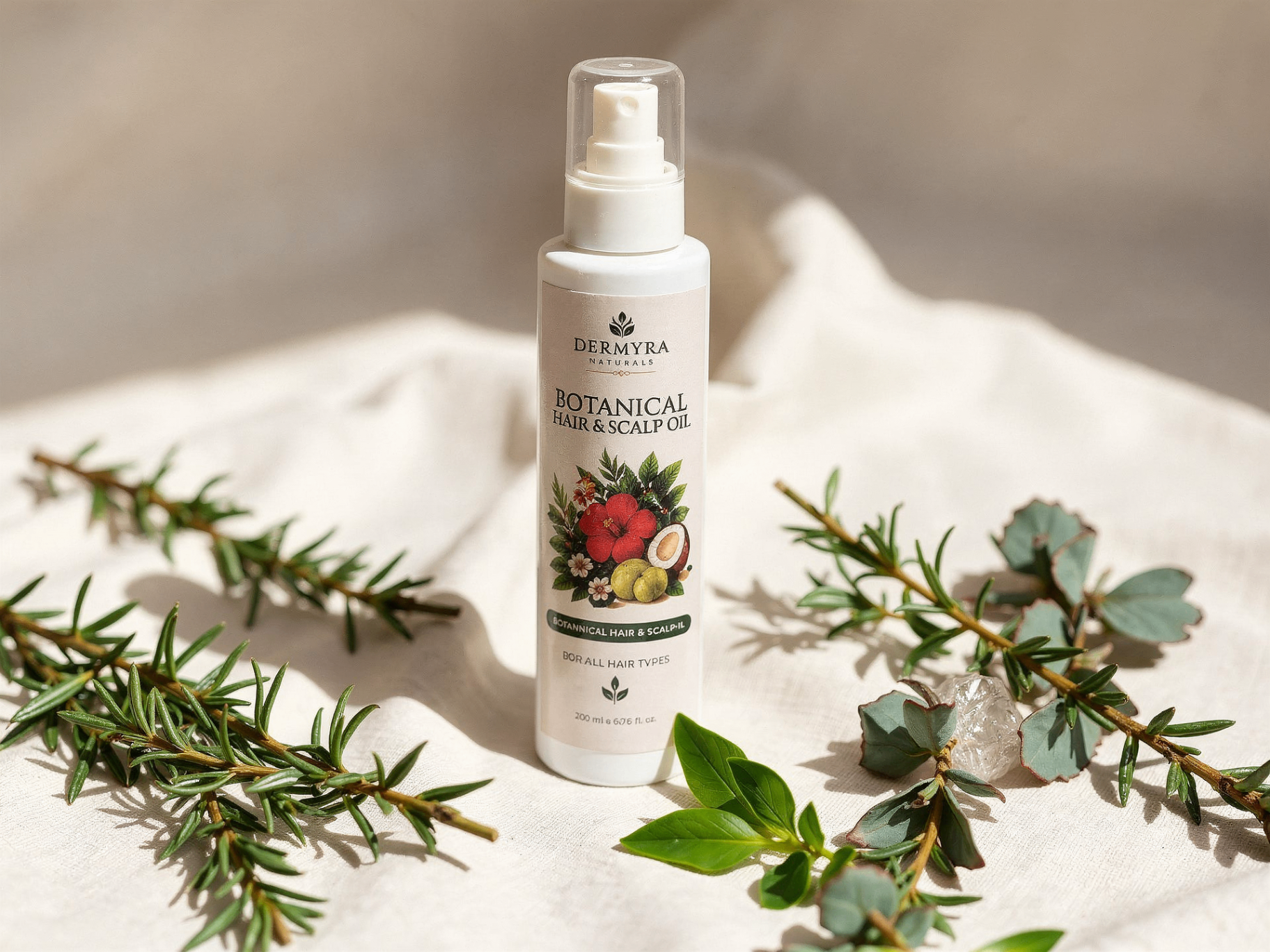
Apply those same questions to Dermyra. Our oil is cold-pressed and blended in small batches in Pakistan, the botanicals sit above the fragrance in the ingredient order, and the oil in the bottle is cloudy amber with visible plant sediment because nothing has been refined out of it. If any brand, including us, dodges those questions, that answer is your answer.
Key herbs and what they actually do
Not all hero ingredients are interchangeable. Here's what the most common ones in Pakistani hair oils are actually good for.
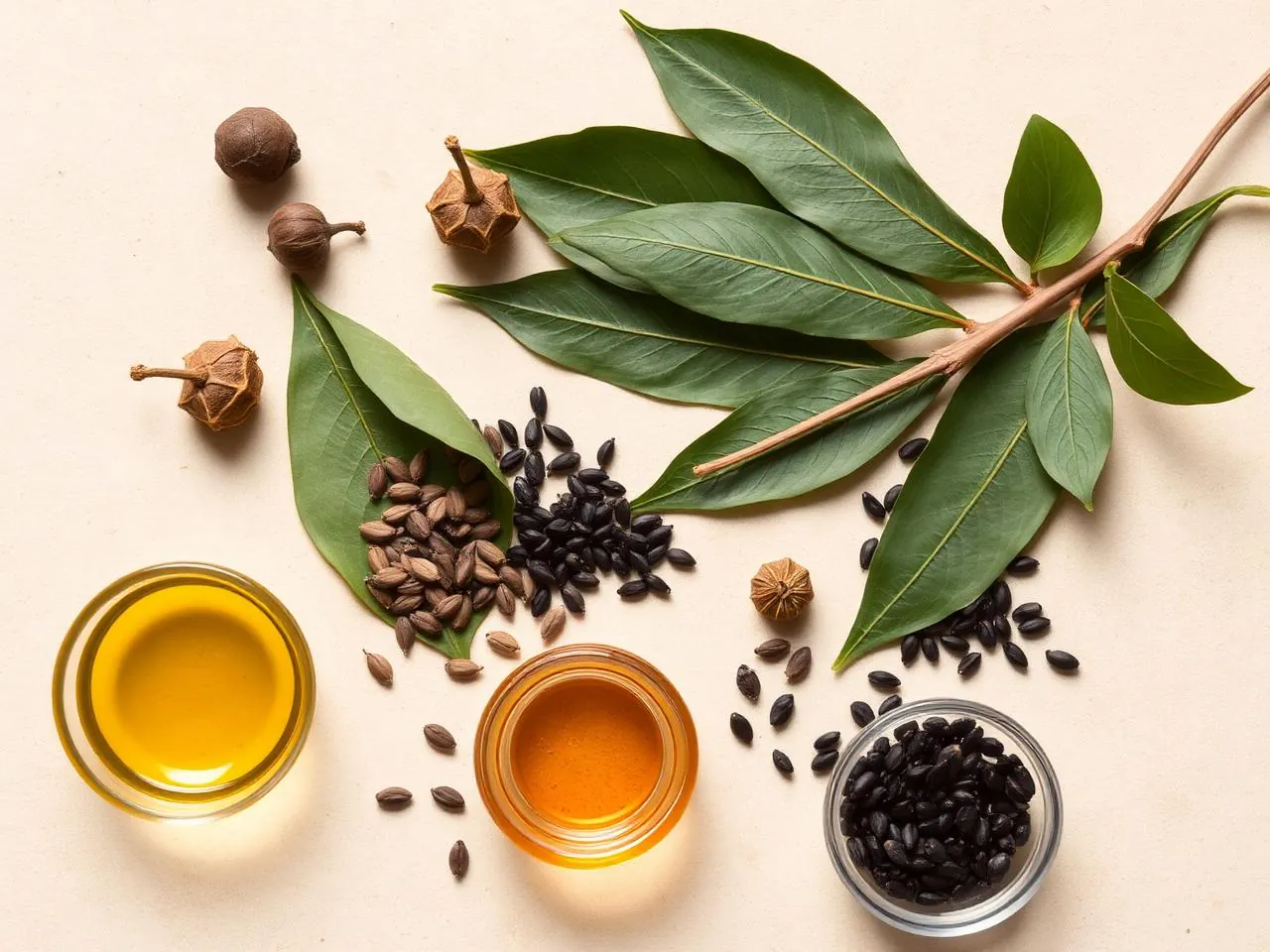
- Amla (Indian gooseberry): rich in vitamin C, traditionally used to strengthen hair roots and add shine. One of the most commonly diluted ingredients on the market, since a small amount goes a long way toward the label claim.
- Bhringraj: sometimes called the king of herbs for hair in Ayurvedic tradition, associated with calming an irritated scalp and supporting hair that's thinning or falling out. Its benefits are cumulative, not immediate.
- Rosemary: widely researched for boosting scalp circulation, one of the more evidence-backed mechanisms behind hair growth oils. Consistent use matters more than concentration here.
- Argan: a deeply conditioning oil, better known for taming frizz and split ends than for scalp or growth benefits. Useful against hard-water roughness on the lengths.
The point isn't that any single herb is a miracle fix. it's that a formula built around real concentrations of these ingredients, cold-pressed to preserve their properties, is doing something meaningfully different from a fragranced mineral oil.
How to use herbal hair oil properly in our climate
Even a genuine herbal oil won't do much if it's used incorrectly, and the standard overnight-every-night advice does not suit Pakistani summers.
- Warm and apply. Warm a few drops between your palms and apply along the scalp, not just the lengths of the hair.
- Massage gently. Massage in circular motions for 3 to 5 minutes. this is what boosts circulation and helps the oil actually reach the scalp.
- Rest, then wash it out. In winter, leave it overnight. In peak summer or high humidity, one to two hours is enough. leaving oil on a sweating scalp all night invites build-up.
- Rinse smart. If your water is hard, do a final rinse with filtered or boiled-and-cooled water to stop mineral film settling back on clean hair.
Used two to three times a week, most people start noticing softer, shinier hair within about two weeks, with stronger, fuller-looking hair typically taking six to eight weeks of consistent use. That timeline is worth knowing going in. it's the honest version, not the results in days version.
Where this leaves you
The herbal or organic label on a hair oil bottle tells you almost nothing on its own. In Pakistan's crowded haircare market it's become more of a marketing category than a formulation standard. What actually matters is the extraction method, the real concentration of the ingredients, how the oil holds up against our heat and hard water, and how transparent the brand is when you ask a direct question.
Dermyra's oil is cold-pressed and handcrafted in small batches, using amla, bhringraj, rosemary and 25+ other herbs at concentrations meant to actually do something, not just make the label true. You can see the full ingredient list on our ingredients pages, or browse the shop to check the formulation against the same criteria in this article.
Conclusion
Ignore the leaf on the label and check four things: how the oil was extracted, how concentrated the herbs really are, whether the routine suits Pakistan's heat and hard water, and whether the brand answers a direct question about percentages and batch size. Judge every bottle in Pakistan by those criteria, including ours.
Looking for the best hair oil in Pakistan?
The advice in this article is product-neutral, but the results depend on what is in the bottle. Dermyra oil is a cold-pressed botanical blend of 28 herbs including rosemary, amla and bhringraj, with no mineral oil, no synthetic fragrance and no colour added.
People usually come to it for one of two reasons: they want a hair fall hair oil that targets the scalp instead of coating the lengths, or they want a dandruff hair oil that calms flaking without leaving residue behind. The same formula handles both because the base is light and the botanicals are infused rather than sprayed on.
For anyone still deciding which hair oil in Pakistan to buy, that combination — cold-pressed base, real infusions, honest labelling — is the short version of what to look for, and what Dermyra hair oil delivers.
Frequently asked questions
Does herbal hair oil actually work for hair growth?+
It can support a healthier environment for hair growth. better scalp circulation, reduced dryness, stronger roots. but it's not a medical treatment for hair loss. If you're dealing with significant hair loss, discuss it with a dermatologist alongside any topical routine.
Which oil is best for hair fall in Pakistan?+
There's no single best. it depends on your scalp and hair type. Formulas combining rosemary (for circulation) with amla and bhringraj (for root strength) are the most commonly recommended combination, provided they're genuinely concentrated rather than trace amounts in a mineral oil base.
Can hard water cause hair fall in Pakistan?+
Hard water does not usually pull hair from the root, but the calcium and magnesium film it leaves makes hair rough and brittle, so strands snap mid-shaft. That looks and feels like hair fall. A mild clarifying wash and a final rinse with filtered water helps.
How can I tell if a hair oil is pure or mixed with mineral oil?+
Check the ingredient list for mineral oil or paraffinum liquidum, see whether the herbs sit above or below the fragrance, ask the brand for the actual percentage of the hero ingredient, and look at the oil in daylight. genuine herb-infused oil is cloudy amber with visible sediment, not water-clear.
How often should hair oil be applied in hot weather?+
Two to three times a week. In peak summer keep it on for one to two hours rather than overnight, since oil on a sweating scalp encourages build-up.
Is bhringraj or amla better for hair growth?+
They work differently. bhringraj is more associated with scalp health and calming irritation, amla with root strength and shine. Most well-formulated herbal oils use both together rather than relying on one alone.