
Cold Pressed Hair Oils: What the Label Actually Means
Summary
- Cold pressed means mechanical extraction with no added heat above about 50 degrees Celsius and no solvents, which keeps more nutrients intact.
- Expeller pressed is also mechanical but generates more friction heat, landing somewhere between cold pressed and industrially refined oils.
- Refined oils are usually extracted with heat and sometimes hexane solvent, then bleached and deodorized, which strips out color, smell and some nutrients along with impurities.
- Mineral oil is a petroleum derivative, not a plant oil, and works purely by sitting on the hair shaft rather than delivering any nutrients.
- The word 'pure' on a label is unregulated in Pakistan and means nothing on its own without a stated extraction method.
- Cold pressed oils cost more because yield per kilogram of seed is lower and the process is slower.
- Checking for a slightly cloudy appearance, natural sediment and a real ingredient smell is a decent way to sanity-check a cold pressed claim at home.
Why Extraction Method Matters More Than Most Labels Admit
Most people shopping for hair oil compare ingredients: rosemary versus amla, coconut versus argan. Fewer people ask how the oil was actually pulled out of the seed or nut in the first place, and that step matters just as much. Two bottles can both say 'sweet almond oil' on the front and be meaningfully different products depending on whether that almond oil was cold pressed, expeller pressed, or chemically refined. The extraction method decides how much of the original plant's vitamin E, fatty acid profile, polyphenols and natural color survives the trip from seed to bottle.
This gets confusing fast because the terminology is not standardized the way food labeling is in some countries. In Pakistan specifically, there is no strict regulatory body enforcing what a brand can print as 'cold pressed' or 'pure' on a cosmetic oil bottle, so a lot of the label language is aspirational at best and misleading at worst. Understanding the actual processes lets you read past the marketing.
What Cold Pressed Actually Means
Cold pressing is a mechanical extraction method where seeds or nuts are crushed under a hydraulic or screw press without adding external heat. The friction from pressing does generate some heat naturally, but the process is engineered to keep the temperature below roughly 45 to 50 degrees Celsius, which is considered the threshold below which most heat-sensitive nutrients (certain vitamins, some polyphenols, delicate fatty acids) stay largely intact. No chemical solvents are used at any stage.
The tradeoff is yield. Cold pressing extracts less oil per kilogram of raw seed compared to heat-assisted or solvent-based methods, which is one of the honest reasons cold pressed oils cost more on the shelf. A press operator gets maybe 25 to 35 percent oil yield from cold pressing certain seeds, versus 90 percent-plus when solvents are added afterward to strip out every last drop. That inefficiency is not a flaw, it is the reason the oil retains more of its natural character.
Expeller Pressed: The Middle Ground
Expeller pressing is also a mechanical, no-solvent method, which is why some brands blur it together with cold pressing on labels, sometimes not entirely honestly. The difference is that expeller pressing uses a continuous screw press running at higher pressure and speed, which generates more friction heat, commonly climbing to 60 to 90 degrees Celsius or higher during the process. That is enough heat to degrade some of the more fragile compounds, though it is still gentler than solvent extraction and the resulting oil is still a genuine, chemical-free mechanical extraction.
In practical terms, expeller pressed oil sits in the middle: not as nutrient-dense as a true cold press, but meaningfully less processed than a refined oil. A lot of commercially available coconut and sesame oil sold in Pakistani markets is expeller pressed rather than truly cold pressed, even when the bottle uses looser language, because expeller pressing scales better for larger production runs.
Refined Oils: What Happens After Extraction
Refined oil generally starts life extracted with heat, and often with a solvent (commonly hexane) used to maximize yield from the leftover seed cake after initial pressing. The crude oil that results is cloudy, strongly colored, and has a pronounced smell that most consumers would find off-putting for cosmetic use. Refining is the industrial cleanup process that follows: degumming to remove phospholipids, neutralizing to remove free fatty acids, bleaching with clay-based filters to strip color, and deodorizing under high heat and vacuum to remove smell.
Refining is not inherently unsafe, and refined oils are used in food and cosmetics worldwide, including for medically necessary reasons in some cases where consistency and shelf stability matter more than nutrient density. But for a hair oil where the entire value proposition is 'these plant nutrients help your scalp and hair,' refining works directly against that goal. A lot of what makes rosemary oil or amla oil interesting for hair, the polyphenols, the vitamin C, the specific fatty acid ratios, gets reduced or destroyed somewhere in the bleaching and deodorizing steps.
Mineral Oil: Not a Plant Oil at All
Mineral oil deserves its own category because it is not a plant extraction at all. It is a byproduct of petroleum refining, purified to cosmetic grade, and it is extremely common in cheap hair oils sold across South Asia because it is inexpensive, shelf-stable indefinitely, and gives hair an immediate glossy look. Mineral oil is generally considered safe for topical use at cosmetic-grade purity and is not the villain some natural-beauty marketing makes it out to be in terms of safety.
Where it falls short for hair specifically is that it has zero plant nutrients: no vitamin E, no fatty acids the hair can actually use, no polyphenols, nothing. It works purely as an occlusive, sitting on top of the hair shaft and scalp to lock in moisture and add shine and slip. For dry ends that just need a smoothing agent, that is not necessarily useless. But if your goal is nourishing the scalp or supporting hair growth, mineral oil is not doing any of that work, and a bottle that lists mineral oil as the primary ingredient while marketing itself as a 'growth oil' is worth reading twice.
Cold Pressed vs Expeller Pressed vs Refined vs Mineral Oil
| Type | Extraction method | Nutrient retention | Smell and color | Typical cost | Best use case |
|---|---|---|---|---|---|
| Cold pressed | Mechanical press, under ~50°C, no solvents | Highest | Strong, natural, sometimes cloudy | Highest | Scalp nourishment, botanical oil blends |
| Expeller pressed | Mechanical press, higher friction heat (60-90°C+) | Moderate to good | Moderate smell, clearer than cold pressed | Moderate | Everyday hair oils, larger production runs |
| Refined | Heat and/or solvent extraction, then bleached and deodorized | Low | Mild to none, pale color | Low to moderate | Shelf-stable, neutral-smell products |
| Mineral oil | Petroleum refining, not plant-based | None (no plant nutrients) | Odorless, clear | Lowest | Sealing moisture, shine on dry ends |
Why This Actually Changes What Happens on Your Scalp
The reason we care about extraction at all, beyond label pedantry, is that hair oils marketed for growth or scalp health are usually leaning on specific plant compounds to do that work: rosemary's carnosic acid and other polyphenols, amla's vitamin C and tannins, bhringraj's various flavonoids. If the base oil or the botanical extract inside it has been heavily heat-processed or solvent-refined, you are paying for the idea of those ingredients without necessarily getting their intact chemistry. This is part of why a genuinely cold pressed formulation costs more to produce and why cutting corners on extraction is one of the easiest ways for a brand to lower costs without changing the ingredient list on the label.
That said, extraction method is not the only variable. A cold pressed oil that has been sitting on a hot shelf in a Lahore warehouse for eighteen months with sun exposure can end up more degraded than a properly stored refined oil. Freshness, packaging (dark glass versus clear plastic) and storage conditions all interact with extraction quality. Cold pressed is a strong starting point, not a guarantee, if the rest of the supply chain is sloppy.
How to Spot a Genuinely Cold Pressed Oil
Since the term is not tightly regulated in Pakistan, you are partly relying on the brand's transparency and partly on your own senses. A few practical checks help.
Signs an oil is likely genuinely cold pressed
- The label states the extraction temperature or explicitly says 'no heat, no solvents' rather than just the word 'cold pressed' alone
- The oil has some natural color variation and is not perfectly clear or uniformly pale
- There is a real, distinct smell of the actual seed or nut, not a neutral or artificially fragranced scent
- A small amount of natural sediment may settle at the bottom over time, which is normal for unrefined oils and not a defect
- The brand can tell you, if you ask, roughly which region or supplier the raw seed came from
- The price reflects the lower yield of cold pressing rather than being suspiciously cheap for the ingredient list claimed
Common Cold Pressed Base Oils in Hair Formulas
Sweet almond oil, sesame oil, castor oil and olive oil are among the most commonly cold pressed carrier oils used in hair formulations across Pakistan and the wider region. Coconut oil is a slightly special case: virgin coconut oil is typically cold or expeller pressed from fresh coconut meat, while the cheaper, more common refined coconut oil (often labeled RBD, refined-bleached-deodorized) has gone through a heat and chemical process specifically to remove coconut's strong smell for use in cooking and cosmetics where a neutral scent is preferred.
Castor oil sold for hair growth deserves a specific mention, because most commercially available castor oil, even when cold pressed, is naturally thick and heavy, and Jamaican black castor oil (a roasted variant, notably not cold pressed in the same sense) is a distinct product with its own separate processing tradition worth knowing apart from standard cold pressed castor oil.
Extraction Method for Botanical Extracts Versus the Base Carrier Oil
It is worth separating two different things that both get called 'extraction' in casual conversation: the carrier oil itself (like sesame or almond oil) and the botanical infusion process used to get herbs like rosemary, amla or bhringraj into that oil. Infused botanical oils are typically made by steeping dried or fresh plant material in a carrier oil, sometimes with gentle warmth to speed up the infusion, then straining. This is a separate step from how the base carrier oil itself was originally pressed, and both stages affect the final nutrient profile.
A well-made blend, like our rosemary oil for hair growth blend pairs cold pressed or minimally processed carrier oils with a careful, low-heat botanical infusion process rather than skipping straight to synthetic fragrance oils that only mimic the smell of rosemary or amla without any of the actual plant chemistry.
A quick fix
Correcting a stray reference above: see our rosemary oil for hair growth guide for how infusion and base-oil quality come together in a finished botanical blend.
What Price Actually Tells You
Price is an imperfect but genuinely useful signal here. A 200 milliliter bottle of a multi-botanical cold pressed hair oil selling for under 300 PKR should raise a flag, not because natural ingredients have to be expensive, but because the math of low-yield cold pressing plus multiple botanical infusions plus proper dark glass packaging rarely lands at that price point without something being cut. That something is usually the extraction method, the botanical concentration, or both, quietly swapped for cheaper refined oil and synthetic fragrance while the label still says 'natural.'
On the flip side, a high price alone does not guarantee cold pressing either. Some of the most aggressively marketed 'premium' hair oils on Daraz are refined or even mineral-oil-based products dressed up with expensive-looking packaging and vague botanical names on the front label. Read the ingredient list, not just the price tag or the bottle design.
Storing Cold Pressed Oils Properly
Because cold pressed oils retain more of their natural antioxidants and volatile compounds, they are also somewhat more prone to oxidation and rancidity than heavily refined oils, which have had many of those reactive compounds stripped out along with the impurities. Store cold pressed hair oils in a cool, dark cabinet rather than a sunny bathroom windowsill, keep the cap tightly closed to limit oxygen exposure, and use within roughly 6 to 12 months of opening. Karachi's humidity and heat in particular will shorten shelf life compared to a drier, cooler climate, so buying smaller bottles more frequently is often smarter than stockpiling a large one.
Does Extraction Method Actually Change Your Results
It is fair to ask whether any of this translates into a visibly different outcome on your scalp, and the honest answer is that it is one factor among several, not the single deciding variable. Consistency of use, whether your hair loss has a treatable cause, your overall diet and stress levels, and how the oil is applied all matter enormously. What extraction method changes is the ceiling of what the oil can plausibly deliver: a cold pressed botanical oil retains more of the actual compounds researchers have studied, while a heavily refined or mineral-oil-based product is working with a much thinner nutritional profile, however nice it smells or however smooth it feels going on.
Reasons to prioritize cold pressed
- Retains more vitamin E, polyphenols and natural fatty acid ratios
- No solvent residue, since no chemical solvents are used in the process
- Generally better suited to scalp nourishment claims than refined alternatives
- Supports honest labeling since the natural smell and color are hard to fake convincingly
- Aligns with a longer tradition of how oils were historically made before industrial refining existed
Reasonable reasons you might not need it
- Costs more, which is not accessible for every budget
- Shorter shelf life and needs more careful storage than refined oils
- Stronger smell and less uniform color, which some people find less pleasant cosmetically
- Not strictly necessary if your only goal is a light-weight, neutral-smell shine serum for ends
- Harder to verify from the label alone without some trust in the brand's transparency
Quick Label-Reading Checklist
Next time you are comparing hair oil bottles
- Check the ingredient list for the actual botanical names, not just marketing terms on the front
- Look for stated extraction method, cold pressed, expeller pressed, or refined, rather than the unqualified word 'natural'
- Be suspicious of very cheap multi-botanical claims, since low-yield extraction and multiple herbs genuinely cost more to source
- Check the color: some natural variation and slight cloudiness is normal for cold pressed oils
- Smell it: a real botanical oil smells like the plant, not like a candle shop
- Check packaging: dark glass bottles protect cold pressed oils better than clear plastic
See how it is done in practice
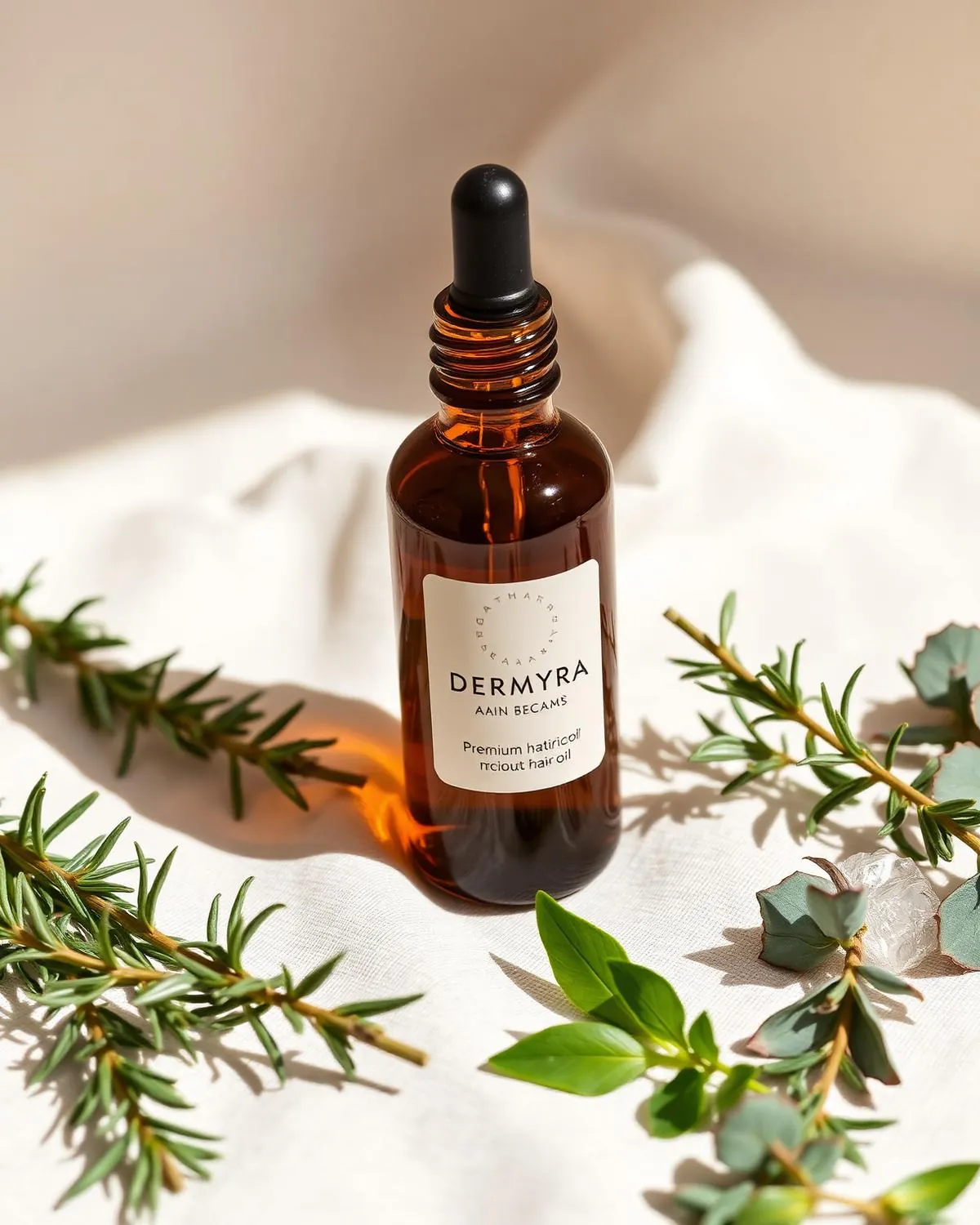
Dermyra Rosemary Hair Growth Oil is built on cold pressed and minimally processed carrier oils, infused with rosemary, amla, bhringraj and 25 other botanicals rather than synthetic fragrance shortcuts.
The Bottom Line on Cold Pressed
Cold pressed is not a magic word, and it is not the only thing that matters when choosing a hair oil. But it is a genuinely meaningful distinction that tells you something real about how much of a plant's original chemistry made it into your bottle. Expeller pressed is a reasonable middle ground, refined oils trade nutrient density for shelf stability and neutral smell, and mineral oil is a different category entirely, useful for sealing moisture but contributing no plant-based nourishment. Reading past the front-label buzzwords to the actual extraction claim, ingredient list and price logic will tell you more than any single word ever could.
Related reading
Frequently asked questions
What does cold pressed actually mean on a hair oil label?
It means the oil was mechanically extracted from seeds or nuts without added heat above roughly 50 degrees Celsius and without chemical solvents. This method preserves more vitamins, fatty acids and antioxidants compared to heat-based or solvent-based extraction, though it produces a lower yield and costs more.
Is expeller pressed the same as cold pressed?
No, though they are both mechanical, solvent-free methods. Expeller pressing runs at higher pressure and speed, generating more friction heat, often 60 to 90 degrees Celsius or more, which can degrade some heat-sensitive nutrients that a true cold press preserves.
Is refined oil bad for hair?
Not unsafe, but generally less nutrient-dense for the purpose of scalp or hair nourishment. Refining involves heat, sometimes solvents, and steps like bleaching and deodorizing that strip out both impurities and some of the beneficial plant compounds, along with the natural color and smell.
Is mineral oil bad for your hair?
It is not unsafe at cosmetic grade, and it works fine as an occlusive to seal in moisture and add shine. It contains no plant-based nutrients though, so it cannot deliver the nourishing benefits associated with botanical oils, and it should not be marketed as a growth-supporting ingredient.
Why is cold pressed oil more expensive?
Cold pressing extracts less oil per kilogram of raw seed than heat or solvent-assisted methods, often only 25 to 35 percent yield versus 90 percent or more with solvent extraction. That lower efficiency, plus slower processing, is reflected directly in the shelf price.
How can I tell if a hair oil is really cold pressed and not just labeled that way?
Look for a stated extraction temperature or explicit no-heat, no-solvent claim rather than just the word alone, check for natural color variation and a genuine plant smell, and be wary of prices that seem too low for the ingredient list claimed.
Does cold pressed coconut oil differ from regular coconut oil?
Yes. Virgin coconut oil is typically cold or expeller pressed from fresh coconut meat and retains its characteristic smell. Refined coconut oil, often labeled RBD, has been heat and chemically processed specifically to remove that smell, which also reduces some nutrient content.
Do I really need a cold pressed oil if I just want shine, not growth support?
Not necessarily. If your only goal is smoothing and shine on the ends, a refined oil or even a mineral-oil-based serum can do that job fine. Cold pressed oils matter most when the product is being used for scalp nourishment or growth support claims.
How should I store a cold pressed hair oil?
Keep it in a cool, dark cabinet away from direct sunlight, keep the cap tightly closed, and use within 6 to 12 months of opening. Cold pressed oils oxidize faster than heavily refined oils, and heat and humidity, common in Karachi, speed that process up further.
Is Jamaican black castor oil cold pressed?
Not in the same sense as standard cold pressed castor oil. Jamaican black castor oil is traditionally made by roasting the castor beans before pressing, which is a distinct process that gives it its dark color and different smell, separate from the low-heat cold press method used for lighter castor oils.
The bottom line
Extraction method is one of the more overlooked details on a hair oil label, and it deserves more attention than it gets. Cold pressed means gentle, no-solvent, low-heat extraction that preserves more of a plant's natural chemistry. Expeller pressed sits a step below that, refined oils trade nutrients for shelf stability and neutral smell, and mineral oil is a petroleum product with no plant nourishment at all. None of this replaces good judgment about your actual hair goals, but reading past the word 'natural' to the actual extraction claim will make you a sharper shopper the next time you are standing in front of a shelf of near-identical bottles.
Where Dermyra hair oil fits in
Everything above works with whatever bottle you already own, but the base matters. Dermyra oil is a cold-pressed, mineral-oil-free blend of 28 botanicals, built for the way people actually use hair oil in Pakistan: a short weekly massage, one to three hours of contact time, then a gentle wash.
If you are shopping for the best hair oil in Pakistan, judge the label rather than the marketing. A genuine hair fall hair oil lists a cold-pressed carrier first, real botanical infusions such as rosemary, amla and bhringraj, and no paraffin. If flaking is your main concern, a dandruff hair oil should also stay light enough not to sit on the scalp between washes.
Dermyra hair oil was formulated around exactly those constraints, which is why the routine in this guide and the oil are designed to be used together.
Keep reading
- Botanical vs Chemical Hair OilHow natural formulas compare to synthetic ones
- Rosemary Oil for Hair GrowthThe evidence behind the most popular botanical
- Best Hair Oil in PakistanA practical buyer's guide
- Shop Dermyra Rosemary Hair Growth OilCold pressed base oils with 28 botanicals
- How to Use Hair Oil ProperlyGetting the most from any hair oil
- Hair Care GuideThe fundamentals of a healthy routine
- Ingredients OverviewEvery botanical we use and why
One bottle, 28 botanicals
Dermyra Rosemary Hair Growth Oil brings rosemary, amla, bhringraj and black seed together in a cold-pressed base. Made in small batches in Pakistan.
Related guides
Benefits of Amla for Hair: Tradition, Evidence and How to Use It
Amla shows up in nearly every desi hair oil ad, but what does it actually do for your scalp and strands? Here is an honest breakdown of the tradition, the research and how to use it well.
Benefits of Bhringraj for Hair: The King of Herbs, Examined
Bhringraj carries the biggest reputation of any Ayurvedic hair herb, sometimes called the king of herbs. Here is what actually backs that title, and what it does not.
Benefits of Black Seed Oil (Kalonji) for Hair and Scalp
Kalonji has a thousand-year head start in traditional medicine and a growing pile of lab studies on thymoquinone. Here is what actually holds up when you separate the folklore from the evidence, and how to use it on your scalp safely.