
Dry Hair: Why It Happens and How to Fix It
Summary
- Dry hair is a cuticle problem, not just a lack of oil, so moisture and sealing both matter
- Karachi's hard tap water and Lahore's dust load hair with minerals that block moisture absorption
- Sulfate shampoos, daily heat styling and chemical treatments are the three biggest daily culprits
- A pre-wash oil massage 1-2 hours before shampoo protects the shaft from surfactant stripping
- High porosity hair (feels dry but absorbs water fast) needs protein plus oil, not oil alone
- Trimming every 8-10 weeks stops dryness from turning into split ends that travel up the shaft
- Consistency over 8-12 weeks matters more than switching products every two weeks
If you run your fingers through your hair and it feels like straw, or it looks dull no matter what you put on it, you are probably dealing with a cuticle problem, not just a dryness problem. The outer layer of each strand, the cuticle, is made of overlapping scales. When they lie flat, hair reflects light and feels smooth. When they are lifted or chipped away, moisture escapes as fast as you put it in, and the strand feels rough to the touch. This guide walks through why that happens in Pakistani conditions specifically, and what actually fixes it versus what just sits on top for a day and washes out.
What dry hair actually is
Hair itself has no blood supply and cannot produce its own oil once it leaves the follicle. The scalp's sebaceous glands make sebum, and it is supposed to travel down the shaft to coat and protect it. Dry hair usually means one of two things: the scalp is not producing or distributing enough sebum, or the hair's structure is damaged enough that it cannot hold onto whatever moisture and oil it does get. Most adults dealing with chronic dryness, especially those who color, blow-dry or live in dry heat, are dealing with the second issue far more than the first.
There is also a difference between dry hair and dehydrated hair. Dry hair usually lacks oil (lipids). Dehydrated hair lacks water and often happens even in oily-scalp people who over-wash or over-heat their hair. In practice both show up the same way: frizz, dullness, tangles and breakage, so the fixes overlap a lot.
The most common causes of dry hair
In our experience talking to customers across Karachi, Lahore and Islamabad, a handful of causes show up again and again.
Hard water
Karachi and much of Punjab have notably hard tap water, high in calcium and magnesium salts. These minerals deposit on the hair shaft over repeated washes, coating the cuticle and making it feel rough and look dull no matter how much conditioner you use. If you have moved cities and your hair suddenly changed texture, water is usually the first suspect. A clarifying rinse (diluted apple cider vinegar, roughly 1 tablespoon in a cup of water, once every 2 weeks) or a shower filter helps noticeably within a month.
Over-washing with sulfate shampoos
Sodium lauryl sulfate and sodium laureth sulfate are strong detergents. They clean well but also strip the thin lipid layer on the cuticle surface. Washing daily with a sulfate shampoo is one of the fastest ways to end up with chronically dry ends, especially if your hair is already colored or chemically treated.
Heat styling and blow-drying
Straighteners run at 180-220C, and that heat denatures the keratin protein in hair, creating micro-cracks in the cuticle. Daily blow-drying on high heat without a heat protectant is one of the most reliably damaging habits we see, more damaging over a year than most people expect from a single tool.
Sun, heat and humidity swings
Long exposure to direct sun, common for anyone commuting on a bike or doing outdoor work in Karachi's summer, degrades the protein structure of hair (UV breaks down melanin and weakens keratin bonds) similarly to how it affects skin. Lahore's dust and smog season adds a layer of grime that, combined with dryness, makes hair feel coarse and look flat.
Chemical treatments
Keratin treatments, hair color, relaxers and perms all work by breaking and reforming the disulfide bonds inside the hair shaft. Every chemical service leaves hair a bit more porous. This is not a reason to avoid them entirely, but it does mean you need a more deliberate moisture routine afterward.
Nutritional and internal factors
Low iron, low protein intake, thyroid issues and crash dieting can all show up as brittle, dry-feeling hair because the keratin the follicle produces is simply weaker. If your hair changed texture without a change in your product or wash routine, it is worth getting a basic blood panel (ferritin, TSH, vitamin D) done rather than only chasing topical fixes.
Understanding your hair porosity
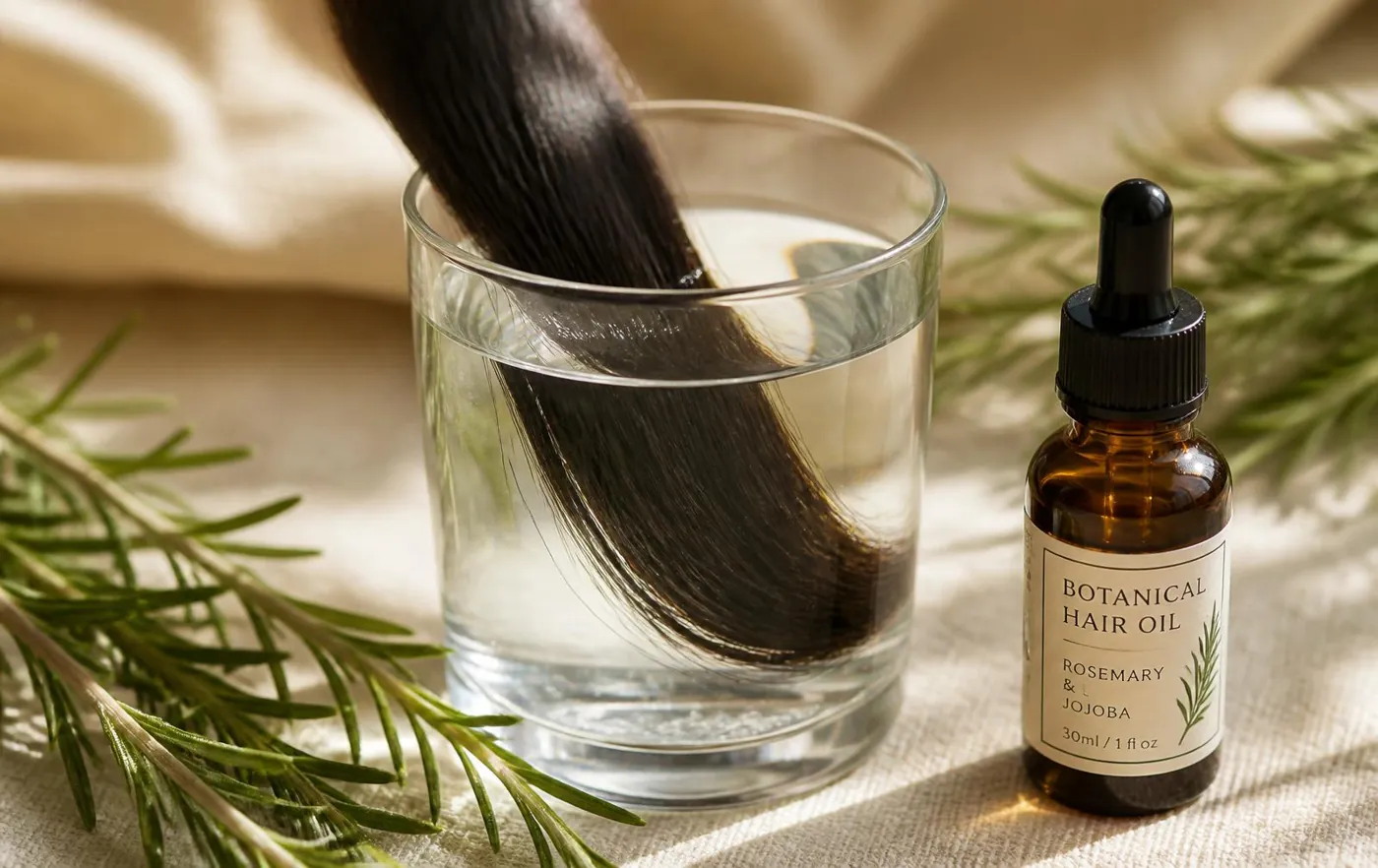
Porosity describes how easily your cuticle lets moisture in and out. A rough way to check it at home: drop a clean, oil-free strand of shed hair into a glass of water. If it floats for a couple of minutes, you likely have low porosity (cuticle lies tight, moisture struggles to get in). If it sinks quickly, you likely have high porosity (cuticle is lifted, moisture goes in and out fast). This is not a lab-grade test, but it is a useful starting point.
Low porosity hair often looks dry because products sit on top without absorbing, so lighter, warm-applied oils work better than heavy creams. High porosity hair, common after coloring or heat damage, absorbs moisture fast but loses it just as fast, so it needs a combination of protein (to patch the cuticle) and oil (to seal it) rather than water-based products alone.
| Cause | How it shows up | What helps | Timeframe to see change |
|---|---|---|---|
| Hard water minerals | Rough texture right after washing, dull look | Diluted ACV rinse every 2 weeks, shower filter | 3-4 weeks |
| Sulfate shampoo overuse | Squeaky-clean but straw-like ends | Switch to sulfate-free, wash 2-3x a week | 2-3 weeks |
| Daily heat styling | Split, frizzy ends, breakage on brushing | Heat protectant, cap heat at 160C, air-dry when possible | 4-6 weeks |
| Sun and humidity exposure | Coarse feel, color fading faster | Scarf or cap outdoors, leave-in with light SPF | Ongoing |
| Chemical treatments | Dryness concentrated at mid-lengths and ends | Protein treatment monthly, deep condition weekly | 4-8 weeks |
| Low iron or thyroid issue | Overall texture change plus shedding | Blood panel, address deficiency with a doctor | 8-12 weeks |
Fixing your wash routine
The single highest-leverage change for most people with dry hair is washing less often and washing gentler. Twice or three times a week with a sulfate-free shampoo is enough for most hair types, including oily scalps, once the scalp adjusts (it usually takes 1-2 weeks to stop overcompensating with extra oil production). Use lukewarm water, not hot. Hot water opens the cuticle further and rinses away natural oils faster than lukewarm water does.
Condition every wash, focusing from mid-lengths to ends, and skip the roots so you do not add unnecessary weight or oiliness near the scalp. Once a week, swap your regular conditioner for a deep conditioning mask and leave it on for 15-20 minutes, ideally under a warm towel or shower cap so the heat helps the product penetrate.
Where oiling actually fits in
Pre-wash oiling is one of the oldest and most evidence-friendly parts of South Asian hair care. A study published in the Journal of Cosmetic Science back in 2003 found that coconut oil, applied before or after washing, reduced protein loss from the hair shaft significantly compared to mineral oil or no oil at all, because its small molecular structure lets it penetrate the cortex rather than just sit on the surface. Rosemary oil does not have the same penetration data, but it is well tolerated, lightweight, and several small trials (including a widely cited 2015 SKINmed trial) have looked at its effects on scalp health, which indirectly supports healthier hair growth from the root.
For dry hair specifically, apply a light botanical oil like rosemary hair oil to the scalp and lengths about 1-2 hours before washing, or even overnight if your pillowcase can handle it (a silk or satin pillowcase, or an old t-shirt covering, keeps the stain and mess down). This is different from applying oil after washing to seal in moisture, which is a lighter, smaller-quantity step and works well for high porosity hair especially. Do not skip washing it out properly; leaving heavy oil on the scalp for days can trap dust and sweat, which is its own irritation risk.
This is one of the few places we will mention our own product directly: Dermyra Rosemary Hair Growth Oil is formulated with amla and bhringraj alongside rosemary and a base of 28 botanicals, so it works as both a pre-wash treatment for dry, brittle strands and a scalp-nourishing oil for people also dealing with thinning or shedding. It is not a miracle fix and will not undo years of heat damage in a week, but used consistently as part of the routine below, most people notice softer, less frizzy hair within 4-6 weeks.
Leave-in products and sealing moisture
After washing, hair is at its most porous and absorbent. This is the best window to apply a leave-in conditioner or a light serum. If your hair is very dry, follow the leave-in with a few drops of oil on just the ends, rubbed between your palms first so it distributes thinly rather than clumping. This is called the LOC-style approach (liquid, oil, cream, or some order of those three) and it is popular in curly and textured hair communities for good reason: water-based products hydrate, oil seals that hydration in, and a heavier cream (if needed) locks it down further for very dry or coily textures.
Diet and internal support
Hair is roughly 90% keratin, a protein, so genuinely low protein intake can affect hair quality over months. Omega-3 fatty acids (fish, walnuts, flaxseed) support the lipid layer of the scalp. Biotin deficiency is rare in people eating a normal diet, so we would not rush to supplement biotin without an actual deficiency confirmed by a doctor; most "biotin gummy" marketing overstates what it does for hair that is not biotin-deficient. Iron deficiency, especially in menstruating women, is a much more common and underdiagnosed cause of both dryness and shedding, and is worth checking with a simple ferritin blood test.
Protecting hair from environment
If you commute by bike or rickshaw in Karachi's summer sun, or spend hours outdoors in Lahore's dusty pre-monsoon months, a light scarf, cap or dupatta over the hair reduces cumulative UV and dust damage more than any product will. Rinsing hair with plain water after a dusty commute, even without shampoo, helps remove particulate buildup that would otherwise sit against the cuticle all day.
What to avoid if your hair is dry
- Daily hot showers on the hair itself, not just the body
- Brushing hair while soaking wet, when it is most fragile and elastic
- Tight, rubber-band ponytails that create friction points along the shaft
- Skipping heat protectant before any tool above 160C
- Using the same towel to rough-dry hair; switch to gentle squeezing with a microfiber or cotton t-shirt
- Layering too many rich products at once, which can leave hair coated and still feeling dry underneath
A sample weekly routine for dry hair
- Sunday: pre-wash oil massage with rosemary oil, leave for 1-2 hours, then wash with a sulfate-free shampoo
- Monday-Tuesday: dry brush gently, apply a small amount of leave-in serum on ends only
- Wednesday: deep conditioning mask for 15-20 minutes, air-dry if possible
- Thursday: light oil on ends before bed, silk pillowcase
- Friday: second wash if needed, always followed by conditioner mid-lengths to ends
- Saturday: rest day, scarf or cap if going outdoors in strong sun or dust
When to see a dermatologist
If dryness comes with sudden patchy hair loss, scalp pain, burning, or visible flaking with redness, see a dermatologist rather than only adjusting your routine. Those symptoms can point to conditions like seborrheic dermatitis or scalp psoriasis that need targeted treatment beyond moisture and oiling.
Quick checklist to fix dry hair
- Switch to a sulfate-free shampoo and wash 2-3 times a week
- Add a pre-wash oil massage once or twice weekly
- Deep condition once a week for 15-20 minutes
- Use lukewarm water, never hot, for washing
- Trim ends every 8-10 weeks
- Protect hair outdoors with a scarf or cap during peak sun and dust
- Get a basic blood panel if dryness appeared suddenly without a routine change
What oiling for dry hair does well
- Reduces protein and moisture loss during washing
- Adds slip that reduces breakage from detangling
- Improves shine and softness within weeks with consistent use
- Feels culturally familiar and is low-cost compared to salon treatments
What it cannot do on its own
- Cannot repair a cuticle that is already split or chemically over-processed
- Too much oil on fine hair can look greasy rather than nourished
- Will not fix dryness caused by an internal deficiency by itself
- Needs 6-8 weeks of consistency to show a real texture change, not overnight
Start with a pre-wash oil massage
Dermyra Rosemary Hair Growth Oil with amla, bhringraj and 28 botanicals works as a weekly pre-wash treatment for dry, frizzy hair while also supporting healthier growth at the root.
Trimming and long-term maintenance
Split ends do not heal. Once the cuticle splits at the tip, it travels up the shaft with every wash and brush stroke unless it is cut off. A trim every 8-10 weeks, even just a quarter inch, keeps dryness from compounding into visible breakage. This is especially true for anyone growing hair out for length, where the temptation is to avoid the salon entirely; a small regular trim is what actually protects the length you are trying to keep.
A few dry hair myths worth dropping
Cutting hair does not make it grow faster or thicker, it only removes damaged ends so the ends you keep look healthier. More product is not always more moisture; over-layering can suffocate the strand rather than help it. And "natural" does not automatically mean gentle: undiluted essential oils, lemon juice rinses, and baking soda washes are common local remedies that can actually irritate the scalp or strip hair further if used often or at the wrong concentration.
Related reading
Frequently asked questions
Is dry hair caused by not oiling enough?
Not necessarily. Dry hair is more often caused by cuticle damage from heat, hard water and sulfates than by a lack of oiling. Oiling helps seal moisture in and reduce breakage, but it will not fix dryness caused by daily heat styling or chemical treatments on its own.
How often should I wash dry hair?
Two to three times a week is usually enough for most hair types, including many oily scalps once they adjust. Washing daily, especially with a sulfate shampoo, strips the natural oil layer faster than it can be replaced and makes dryness worse over time.
Can hard water really make hair dry?
Yes. Hard water common in Karachi and parts of Punjab deposits calcium and magnesium on the hair shaft, coating the cuticle and making hair feel rough even right after washing. A diluted apple cider vinegar rinse every 2 weeks or a shower filter noticeably helps within about a month.
Should I oil my hair before or after washing?
Both have a place. Pre-wash oiling for an hour or two protects the shaft from surfactant stripping during shampooing. A small amount of oil after washing, on damp or dry ends, seals in moisture from your conditioner. Use less oil after washing than before.
What is hair porosity and why does it matter for dryness?
Porosity is how easily your cuticle lets moisture in and out. Low porosity hair resists absorbing products, so it needs lighter, warm-applied oils. High porosity hair absorbs fast but loses moisture just as fast, so it needs protein plus oil rather than water-based products alone.
Can diet actually affect how dry my hair looks?
Yes, over months rather than days. Low protein intake, low omega-3s, and especially low iron (common in menstruating women) can all show up as brittle, dry-textured hair. If dryness appeared suddenly without any routine change, a basic blood panel is worth doing.
Does trimming split ends actually help with dryness?
It stops existing damage from spreading further up the strand, since a split cuticle does not heal itself and travels upward with washing and brushing. It will not moisturize the rest of the hair, but it is a necessary part of managing chronic dryness alongside a moisture routine.
Is rosemary oil good for dry hair specifically?
Rosemary oil is lightweight and well tolerated, and works well as part of a pre-wash routine to add slip and reduce breakage during washing. Most of the research on rosemary oil focuses on scalp health and growth rather than moisture retention in the shaft itself, so pair it with a proper conditioner and deep mask routine for dryness.
Why does my hair feel dry even though my scalp gets oily fast?
This is common and usually means dehydration rather than lack of oil: the scalp produces sebum normally but it does not travel down or get retained along the length, especially if ends are damaged from heat or color. Focus moisture products from mid-lengths to ends and keep the scalp routine separate.
When should I see a dermatologist about dry hair?
If dryness is paired with sudden patchy hair loss, scalp pain, burning, or visible redness and flaking, see a dermatologist rather than adjusting products further, since these can indicate conditions like seborrheic dermatitis or scalp psoriasis that need targeted treatment.
The bottom line
Dry hair is fixable, but it is a cuticle and moisture-sealing problem more than a single-product problem. Cut back on sulfates and hot water, add a consistent pre-wash oiling habit, deep condition weekly, and protect hair from Karachi's sun or Lahore's dust when you are outdoors. Give any new routine 6-8 weeks before judging it, since hair changes slowly and shed strands take time to be replaced by healthier growth. If dryness comes with pain, patches or sudden shedding, see a dermatologist rather than guessing further with products.
Looking for the best hair oil in Pakistan?
The advice in this article is product-neutral, but the results depend on what is in the bottle. Dermyra oil is a cold-pressed botanical blend of 28 herbs including rosemary, amla and bhringraj, with no mineral oil, no synthetic fragrance and no colour added.
People usually come to it for one of two reasons: they want a hair fall hair oil that targets the scalp instead of coating the lengths, or they want a dandruff hair oil that calms flaking without leaving residue behind. The same formula handles both because the base is light and the botanicals are infused rather than sprayed on.
For anyone still deciding which hair oil in Pakistan to buy, that combination — cold-pressed base, real infusions, honest labelling — is the short version of what to look for, and what Dermyra hair oil delivers.
Keep reading
- Hair care routine guideA full daily and weekly hair care routine
- Rosemary oil for hair growthWhat the research actually says about rosemary oil
- Benefits of amla for hairHow amla supports hair strength and shine
- Oily scalp guideBalancing sebum without stripping the scalp
- Shop Dermyra Rosemary Hair Growth OilOur botanical oil with amla and bhringraj
- How to use hair oilApplication steps and timing
One bottle, 28 botanicals
Dermyra Rosemary Hair Growth Oil brings rosemary, amla, bhringraj and black seed together in a cold-pressed base. Made in small batches in Pakistan.
Related guides
Best Hair Oil in Pakistan: How to Choose One That Actually Works
From mustard oil in your grandmother's kitchen to rosemary blends sold online, Pakistan's hair oil shelf is crowded and confusing. Here is how to actually compare them.
Oily Scalp: How to Balance Sebum Without Stripping It
An oily scalp is not solved by washing more or stopping oil altogether. Here is what actually regulates sebum in humid Pakistani weather.
Damaged Hair: Repair What Can Be Repaired
Not all hair damage is equal, and not all of it can be reversed. Here is an honest breakdown of what heat, bleach, colour, mechanical stress and hard water actually do to your strands, and what genuinely helps each one.